
Beige Microcement: A Timeless Choice for Modern Homes
Why beige is the most forgiving microcement neutral: how it handles dust and foot traffic, how it holds its warmth under evening light, and where it works best in US homes.
Beige Microcement: A Timeless Choice for Modern Homes
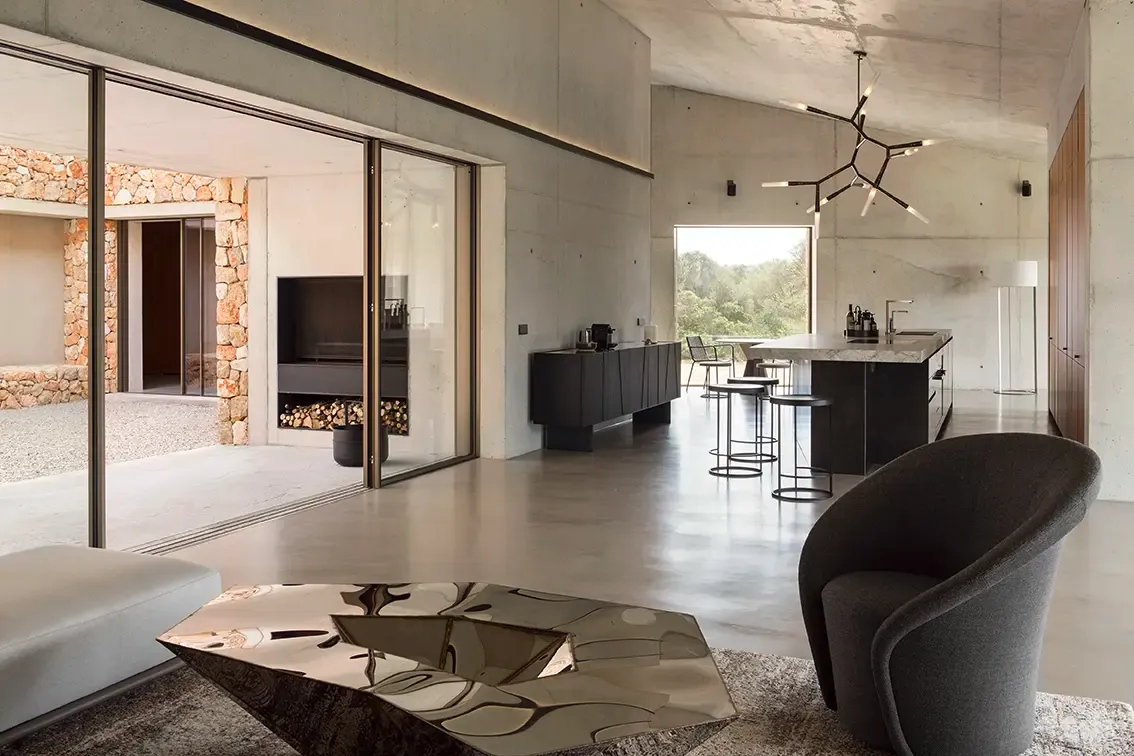
Beige microcement is the warm end of the neutral scale — the tone people specify when white feels clinical and gray feels cold. Its sand undertone keeps its warmth under 2700K evening lighting instead of drifting gray, and that same undertone makes it the most forgiving option in the microcement colors range when it comes to fine dust, dry grit and foot traffic.
Key Benefits of Beige Microcement
Warm Aesthetic:
Seamless Finish:
No grout lines means no grid of grout to darken at the edges — the most common way a beige tiled floor starts to look dirty. Beige microcement ages as one surface instead of a hundred small ones.
Durability:
Beige is a mid-value tone, and that matters more than people expect: it sits far enough from pure white that shoe scuffs do not read as dark marks, and far enough from charcoal that dust does not read as a pale film. In entry halls, mudrooms and hallways it holds its look longer than either extreme.
Easy Maintenance:
Versatility:
Beige sits comfortably with terracotta, travertine, rattan, unlacquered brass and bleached oak — the palette behind Southwestern, coastal and warm-minimalist US interiors. It is the neutral that lets those materials stay the focus.
Why Choose Beige Microcement?
Enhancing Every Room with Beige Microcement
Living Room
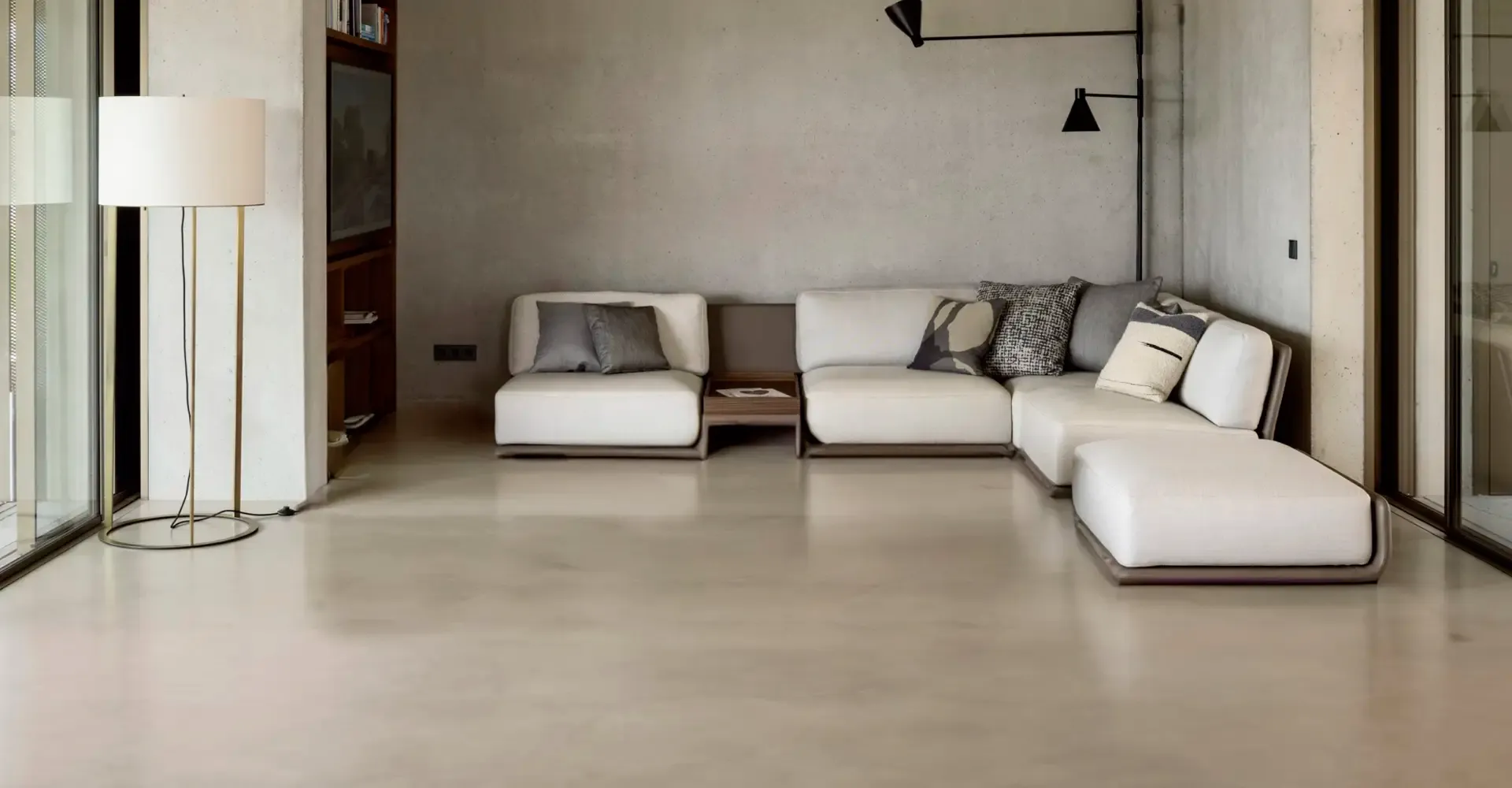
In a living room, beige is the tone that makes a large open plan feel settled rather than empty. It returns about as much light as a light oak floor, so the room stays bright without the reflected glare of a white floor, and it reads the same from morning daylight to lamp light at night. That stability is why it is specified so often on open-plan main floors, where one surface is seen under every lighting condition of the day.
Kitchen
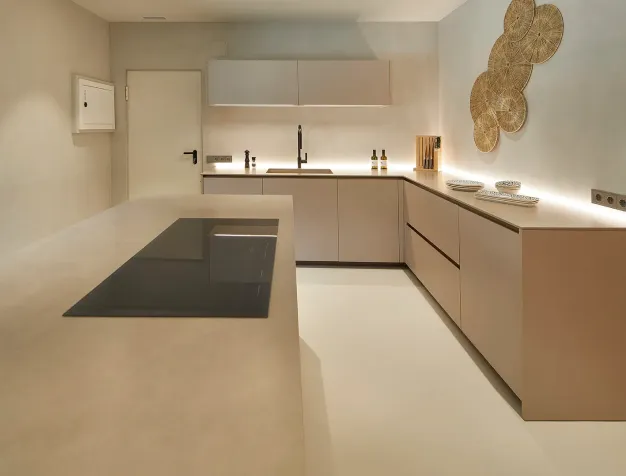
In the kitchen, beige involves a tradeoff worth understanding. It hides crumbs, flour and dry spills better than any other tone. What it does show is dark liquid — coffee, red wine, soy, turmeric — which needs wiping promptly on a beige countertop or backsplash. Forgiving with dry mess, demanding with dark liquid: that is the honest summary, and it is why many kitchens run beige on floors and walls and a darker tone on the work surface.
Bathroom
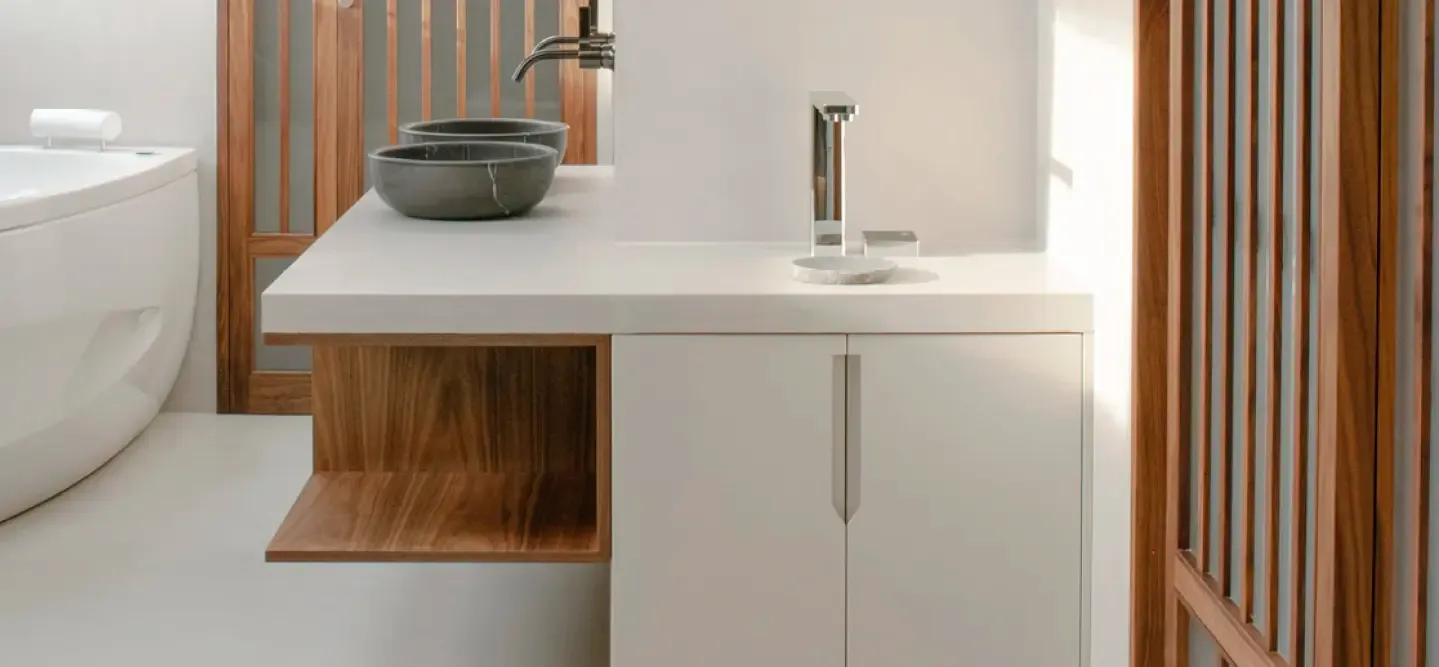
Beige is the warm alternative to the default white bathroom, and its practical edge is hard water. Across much of Texas, Arizona, Florida and the Midwest, dried mineral spotting on a dark shower wall is obvious and on a beige one is close to invisible, because deposit and surface are both pale and warm. Sealed as a continuous shower surround, there is also no grout for mildew to sit in.
Bedroom
In a bedroom the argument for beige is color temperature. Bedrooms are used mostly at the two ends of the day, under low warm light, and beige is one of the few tones that does not shift under it: a gray floor looks blue at 6am and a white one looks yellow at 10pm, while beige stays beige.
Outdoor Areas
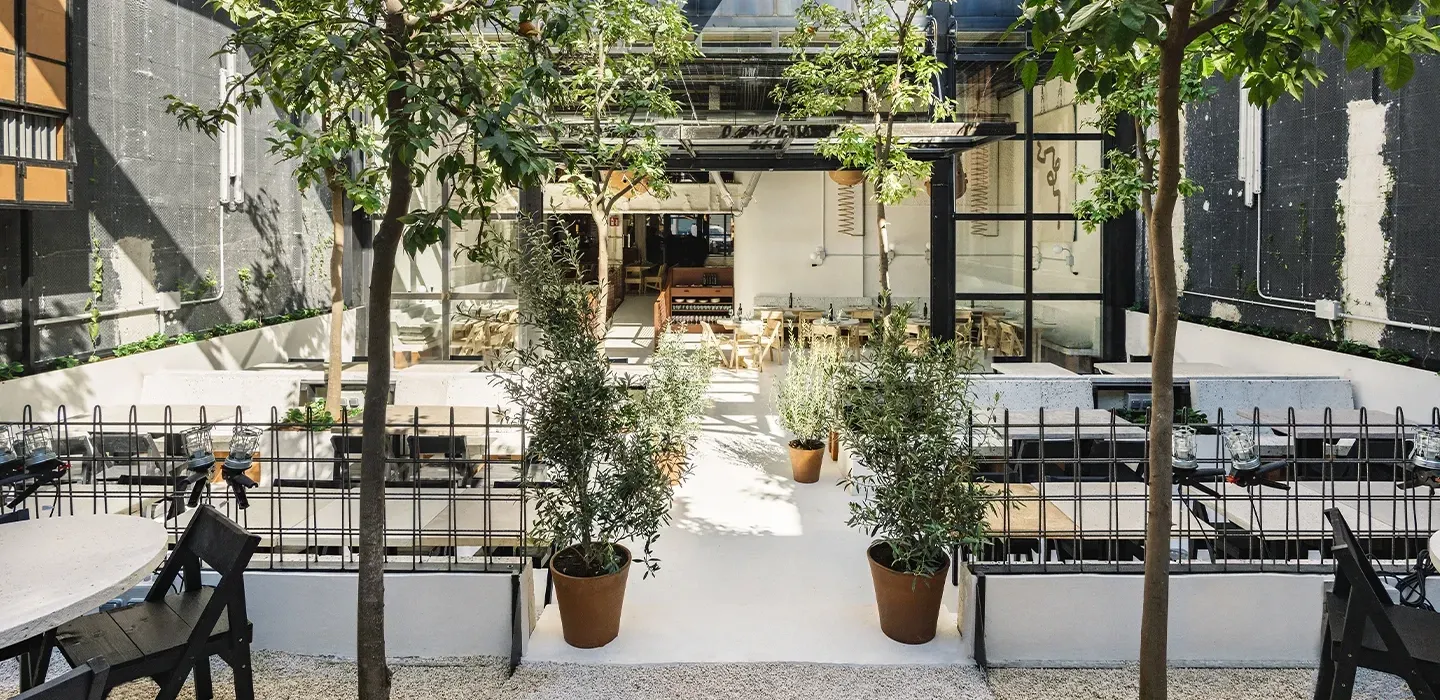
Outdoors is where beige earns its place. A pale warm surface stays cooler underfoot in direct sun than a dark one, which is why sand tones dominate pool decks and patios across Arizona, Nevada, Texas and Florida — the same markets where Topcret has certified applicators in Phoenix, Dallas, San Antonio and Miami. Beige also camouflages the dust and pollen that settle on any outdoor surface between cleanings, and non-slip finishes are available for wet areas.
Beige is not the loudest microcement color, and that is the point: it is the one specified when the surface has to sit behind the furniture, the light and the view — indoors and out — without ever looking dirty.
The Psychology of Beige Microcement
What beige actually does to a room, in practical terms:
Warmth and Comfort:
Holds its warmth under low evening light instead of going flat or gray.
Neutral Elegance:
Sits with terracotta, brass, rattan and bleached oak without competing with any of them.
Space Enhancement:
Reflects enough daylight to open up a small room, but not enough to create the glare a white floor produces beside a south-facing window.
Reads as a Material, Not a Paint Color:
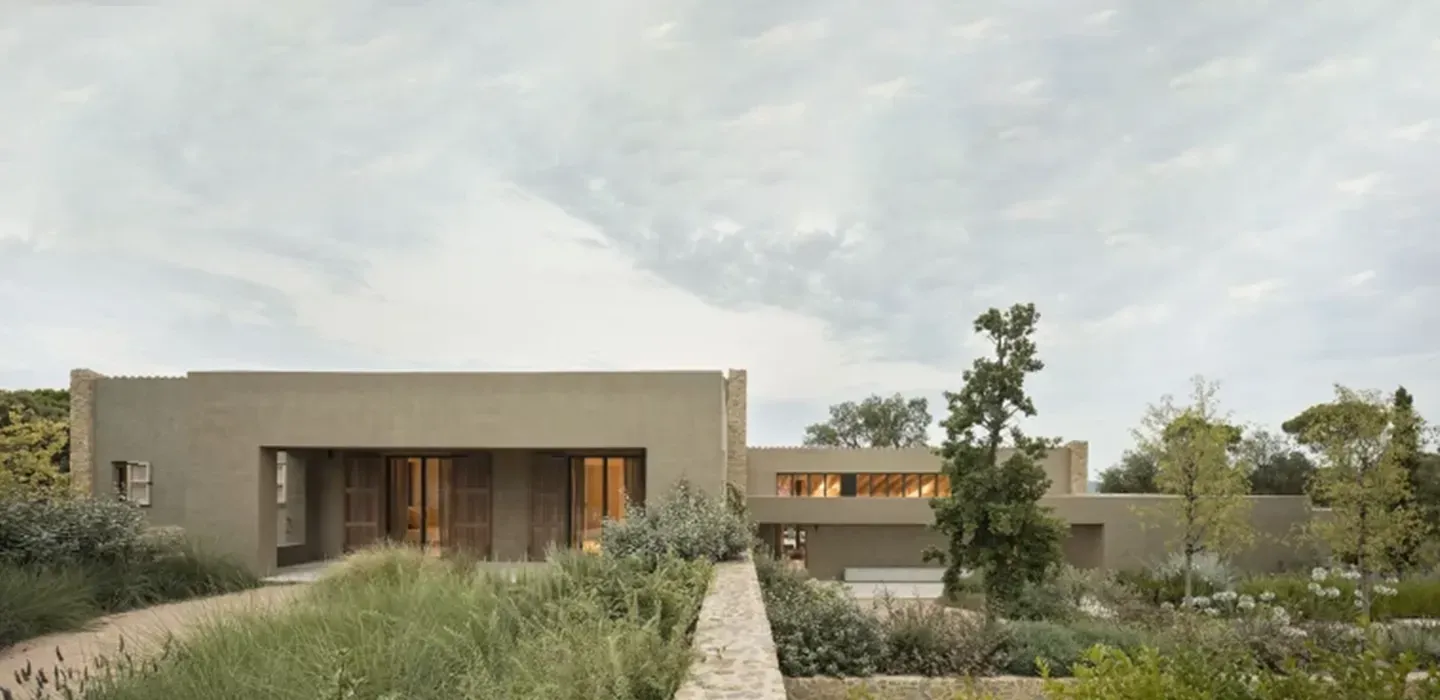
Beige microcement reads as sand, stone or unbleached linen rather than as a painted wall — the texture carries the tone.
The Impact of Beige Microcement on Small Spaces
Here is why beige works in small rooms, where white is the obvious choice but not always the better one:
Forgiving at Close Range:
In a small room every surface is within arm’s reach, so marks are seen close up. Beige is the tone that shows them least.
Light Reflectivity:
Beige returns most of the daylight that hits it while diffusing it, so a narrow hallway or a windowless powder room brightens without the hard bounce you get off gloss white.
Neutral Background:
Because beige carries no strong hue, a small room does not read as a color-themed room. The eye keeps moving across the space instead of stopping at the walls.
Visual Expansion:
Running the same beige across floor, wall and any step or niche removes the visual break where two materials meet — the main thing that makes a compact room read as small.
Applied continuously, beige microcement turns a compact room into a single calm volume instead of a set of small separate surfaces.
Conclusion
Beige microcement is the practical warm neutral: forgiving with dust and dry mess, stable under both daylight and evening light, cooler underfoot outdoors than dark tones, and at home with the terracotta, timber and brass palettes common in warm-climate US interiors. Its one weakness — dark liquid on a work surface — is worth knowing before you specify it.
Request a quote
Tell us about your project
A few quick questions and we will get back to you with a tailored proposal.
Email or call us
The quote form needs JavaScript. You can also contact us directly:
A rough figure is fine.
Optional
Where are you based?
Your handle or a link to the profile.
Your contact details
Last step: we will email or call you with our answer.
Please wait a moment…
Preview: the HubSpot form is embedded here. No data is sent in this demo.
We could not load the last step
Email or call us and we will get back to you all the same:
Thank you for your interest
We have received your enquiry. A Topcret advisor will be in touch with you very soon.
Preview complete
This is a demo: no data was sent and nobody will receive this enquiry.
Discover our Colours
Our colourist experts developed more than 30 base colours to fulfill a wide range of applications. But we don’t want to limit your imagination, so we created Paint To Sample, a Topcret® innovation powered by your imagination, to offer high-end, enhanced personalisation for customers.
Our ISO certification process assures zero colour deviations, so what our client dreamed is what they will see installed in their project.
- Over 30 base colours available
- Colour on demand
- Finishes in several textures
In today’s world our connection with nature holds immense importance, and it is this bond that inspires our colours.
Application process
Surface preparation
Clean, dry and free of dust or grease. Any existing damage is repaired to guarantee a smooth surface.
Primer application
It creates an ideal bonding surface and can be tinted to match the colour of the microcement.
Mixing
It is mixed with water and the chosen pigments until the colour and texture are right.
First coat
Applied in a thin layer, left to dry before the second application.
Second coat
Slightly thicker than the first, this is the one that creates the texture and the finish.
Sealing and finishing
A sealer protects the surface from stains and damage; a finishing wax or oil sets the final look.
Success Stories
Real projects, real results.







What our clients say
- Topcret helped me doing a repair on my existing floor, and went the distance to get a good result. I would definitely use them againGillian D.★★★★★ (opens in a new tab)
- Jack and the team at Topcret were top-draw. We're beyond pleased with the finished look, but also very impressed with the experience. From our 1st meeting to the aftercare, Topcret were nothing but professional, knowledgable, friendly and flexible. Highly recommend.Sam S.★★★★★ (opens in a new tab)
- Topcret and Juan in particular went above and beyond. Juan worked long days to finish the project as soon as possible, and used his technical knowledge and expertise to problem-solve some of the issues we had with previous tradesmen's mistakes. So happy Topcret could match the paint colour we wanted and that the result is more of an even finish than the typical microcement mix of shades (which they can do as well - we just didn't want that look). Delighted with the result and would definitely use them again. Thank you so much!Isabel D.★★★★★ (opens in a new tab)
- We had our kitchen and bathrooms done in our house in Sydney. The team was very friendly and efficient and the end result was exactly what we wanted. Can’t recommend them enough!Carolina R.★★★★★ (opens in a new tab)
- Topcret’s attention to detail and overall quality of their work is exceptional. I am pleased with the results and would highly recommend Topcret to anyone in need of their services.Rodrigo T.★★★★★ (opens in a new tab)
- Jack has been incredibly helpful in answering all my inquiries since I’ve first visited the showroom. He also made sure that all the technical queries that were put forth from the architects were addressed and proposed solutions to better fit the material. I couldn't be happier, and would recommend 100%.Liza M.★★★★★ (opens in a new tab)
- I recently hired Topcret to finish the renovation on my kitchen and couldn’t be happier with the results. The transformation they've made is just incredible. Provided high quality work with great attention to detail. I would recommend Topcret to anyone looking to make their spaces more attractive!Francesco N.★★★★★ (opens in a new tab)
- Love the product and great customer service. I decided to go for a warm terracotta and Top Cret were very happy to accommodate to develop my own colour.Jacqui P.★★★★★ (opens in a new tab)
- Really happy with the quality of work Topcret have provided for my home. They did 2 Bathrooms, floors and walls which were finished in just 3 days. Jack was extremely helpful throughout the process, answering the many questions I had for him. Great product/ service, I will be recommending to everyone.Tommy J.★★★★★ (opens in a new tab)