
Microcement Ceilings: Seamless, Modern Ceiling Finishes
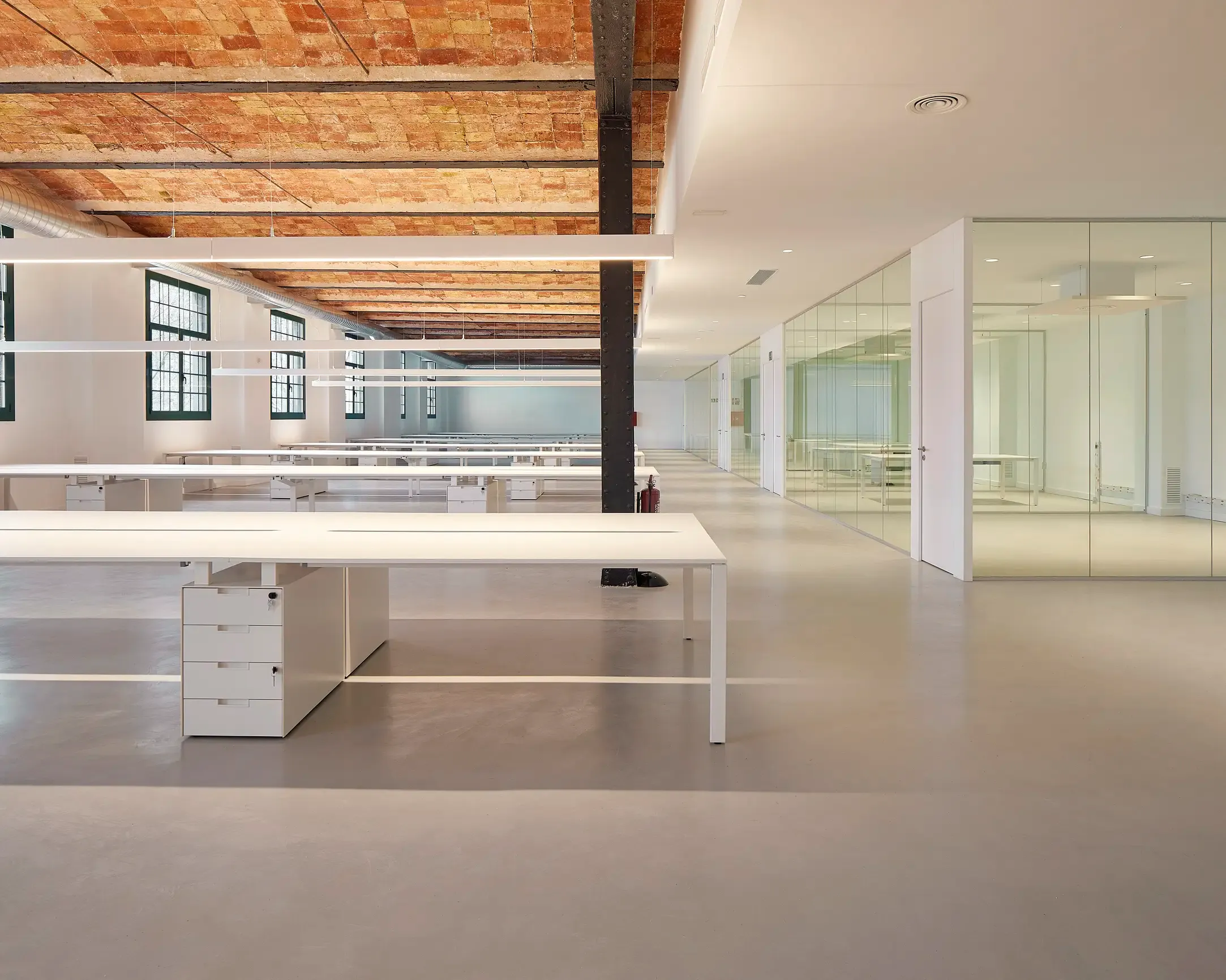
When people think of microcement, floors and walls usually steal the spotlight. But look up—because microcement ceilings are rapidly becoming one of the most striking design features in modern interiors. Sleek, seamless, and surprisingly practical, a microcement ceiling transforms what is often the most overlooked surface into a powerful architectural statement.
Whether you’re designing a luxury bathroom, a minimalist home, or a high-end commercial space, microcement on ceilings delivers continuity, texture, and elegance without visual clutter.
What Is a Microcement Ceiling and Why Is It Trending?
Microcement is a cement-based decorative coating applied in ultra-thin layers—usually just 2–3mm thick. When used on ceilings, it creates a continuous, joint-free surface that feels sculptural rather than structural.
Unlike plasterboard joints, paint lines, or suspended panels, microcement forms a single uninterrupted skin. The result? A ceiling that feels intentional, modern, and architectural.
Traditional ceiling finishes can feel dated or purely functional. Microcement, on the other hand, adds depth, texture, and materiality. Architects and interior designers are increasingly using ceilings as a fifth wall—one that enhances the spatial experience rather than fading into the background.
Key Benefits of Installing Microcement on Ceilings
Seamless, Joint-Free Aesthetics
No cracks, no joints, no visible fixings. Microcement ceilings offer a clean, monolithic look, ideal for minimalist and contemporary spaces. This seamless finish visually enlarges rooms and creates a calm, cohesive environment.
Lightweight and Suitable for Existing Ceilings
Thanks to its minimal thickness and weight, microcement can be applied directly over existing surfaces, including plasterboard, concrete, and even tiled ceilings—without major demolition.
Moisture Resistance for Bathrooms and Kitchens
With the correct sealing system, microcement ceilings are highly resistant to humidity. This makes them perfect for bathrooms, showers, spas, and kitchens, where condensation and steam are constant challenges.
Durability and Long-Term Performance
Once sealed, a microcement ceiling is hard-wearing and resistant to everyday wear. It won’t peel like paint or yellow over time, making it a long-term design investment.
How Microcement Performs on Ceilings
When applied using a professional system like Topcret’s, microcement delivers excellent performance on overhead surfaces.
Key advantages include:
Minimal weight: With a thickness of just 2–3 mm, microcement adds very little structural load, making it suitable for both new builds and renovations.
Seamless finish: The joint-free surface eliminates the need for cover strips or decorative transitions, especially valuable in open-plan spaces.
Moisture resistance: When correctly sealed, microcement ceilings are suitable for bathrooms, kitchens, spas, and other humid environments.
Durability and flexibility: Reinforcement systems and proper substrate preparation help prevent microcracking and ensure long-term reliability.
Design Opportunities with Microcement Ceilings
Microcement is not just a finish—it shapes the atmosphere of a space. Designers commonly use it on ceilings to achieve:
Monochromatic interiors: The same tone across floor, wall, and ceiling for immersive, spa-like environments.
Subtle contrast: Darker ceilings to visually lower the space and create intimacy in social or hospitality settings.
Soft trowel textures: Gentle surface movement that adds depth without overpowering the design.
Ceiling zoning: Defining areas within open-plan layouts without physical partitions.
Where Microcement Ceilings Work Best
Bathrooms and Wet Areas
A microcement ceiling in a bathroom eliminates paint blistering and mould-prone joints. Combined with microcement walls, it delivers a spa-like, waterproof aesthetic.
Kitchens and Open-Plan Living Spaces
In open-plan interiors, ceiling continuity helps unify spaces. Microcement ceilings pair beautifully with concrete floors, natural wood, and contemporary lighting.
Commercial Interiors and Hospitality Projects
Hotels, restaurants, showrooms, and offices benefit from the durability and high-end appearance of microcement ceilings—especially in spaces aiming for a raw, modern identity.
Is a Microcement Ceiling Safe and Practical?
Crack Resistance and Structural Considerations
When applied correctly using reinforced systems, microcement ceilings are highly resistant to cracking. The flexibility of the material allows it to adapt to minor structural movements.
Fire, Hygiene, and Indoor Air Quality
Microcement is non-toxic once cured and does not emit VOCs. It’s also hygienic, making it suitable for both residential and commercial environments.
Why DIY Structural Repairs Often Fail
Attempting to fix cracks without addressing movement usually leads to repeat failure — often worse than the original damage.
Installation Considerations
Ceiling applications require precision. Microcement ceilings should always be installed by trained professionals who understand substrate preparation, reinforcement, and sealing systems specific to overhead use.
Correct execution ensures a flawless finish, long-term durability, and consistent performance in real-world conditions.
Why Choose Topcret Microcement for Ceiling Applications
Topcret’s microcement systems are specifically engineered for high-performance architectural surfaces. With superior adhesion, flexible reinforcement, and advanced sealers, Topcret ensures flawless results—even overhead.
Conclusion: Is a Microcement Ceiling Right for Your Space?
If you’re looking to elevate your interior beyond the ordinary, a microcement ceiling offers elegance, durability, and seamless beauty. It’s not just a finish—it’s a design statement that transforms how a space feels from the ground up.
Request a quote
Tell us about your project
A few quick questions and we will get back to you with a tailored proposal.
Email or call us
The quote form needs JavaScript. You can also contact us directly:
A rough figure is fine.
Optional
Where are you based?
Your handle or a link to the profile.
Your contact details
Last step: we will email or call you with our answer.
Please wait a moment…
Preview: the HubSpot form is embedded here. No data is sent in this demo.
We could not load the last step
Email or call us and we will get back to you all the same:
Thank you for your interest
We have received your enquiry. A Topcret advisor will be in touch with you very soon.
Preview complete
This is a demo: no data was sent and nobody will receive this enquiry.
Discover our Colours
Our colourist experts developed more than 30 base colours to fulfill a wide range of applications. But we don’t want to limit your imagination, so we created Paint To Sample, a Topcret® innovation powered by your imagination, to offer high-end, enhanced personalisation for customers.
Our ISO certification process assures zero colour deviations, so what our client dreamed is what they will see installed in their project.
- Over 30 base colours available
- Colour on demand
- Finishes in several textures
In today’s world our connection with nature holds immense importance, and it is this bond that inspires our colours.
Application process
Surface preparation
Clean, dry and free of dust or grease. Any existing damage is repaired to guarantee a smooth surface.
Primer application
It creates an ideal bonding surface and can be tinted to match the colour of the microcement.
Mixing
It is mixed with water and the chosen pigments until the colour and texture are right.
First coat
Applied in a thin layer, left to dry before the second application.
Second coat
Slightly thicker than the first, this is the one that creates the texture and the finish.
Sealing and finishing
A sealer protects the surface from stains and damage; a finishing wax or oil sets the final look.
Success Stories
Real projects, real results.








What our clients say
- Topcret helped me doing a repair on my existing floor, and went the distance to get a good result. I would definitely use them againGillian D.★★★★★ (opens in a new tab)
- Jack and the team at Topcret were top-draw. We're beyond pleased with the finished look, but also very impressed with the experience. From our 1st meeting to the aftercare, Topcret were nothing but professional, knowledgable, friendly and flexible. Highly recommend.Sam S.★★★★★ (opens in a new tab)
- Topcret and Juan in particular went above and beyond. Juan worked long days to finish the project as soon as possible, and used his technical knowledge and expertise to problem-solve some of the issues we had with previous tradesmen's mistakes. So happy Topcret could match the paint colour we wanted and that the result is more of an even finish than the typical microcement mix of shades (which they can do as well - we just didn't want that look). Delighted with the result and would definitely use them again. Thank you so much!Isabel D.★★★★★ (opens in a new tab)
- We had our kitchen and bathrooms done in our house in Sydney. The team was very friendly and efficient and the end result was exactly what we wanted. Can’t recommend them enough!Carolina R.★★★★★ (opens in a new tab)
- Topcret’s attention to detail and overall quality of their work is exceptional. I am pleased with the results and would highly recommend Topcret to anyone in need of their services.Rodrigo T.★★★★★ (opens in a new tab)
- Jack has been incredibly helpful in answering all my inquiries since I’ve first visited the showroom. He also made sure that all the technical queries that were put forth from the architects were addressed and proposed solutions to better fit the material. I couldn't be happier, and would recommend 100%.Liza M.★★★★★ (opens in a new tab)
- I recently hired Topcret to finish the renovation on my kitchen and couldn’t be happier with the results. The transformation they've made is just incredible. Provided high quality work with great attention to detail. I would recommend Topcret to anyone looking to make their spaces more attractive!Francesco N.★★★★★ (opens in a new tab)
- Love the product and great customer service. I decided to go for a warm terracotta and Top Cret were very happy to accommodate to develop my own colour.Jacqui P.★★★★★ (opens in a new tab)
- Really happy with the quality of work Topcret have provided for my home. They did 2 Bathrooms, floors and walls which were finished in just 3 days. Jack was extremely helpful throughout the process, answering the many questions I had for him. Great product/ service, I will be recommending to everyone.Tommy J.★★★★★ (opens in a new tab)