
TOPCRET – CLAY
Clay wall finishes: textures and where each one works
A clay wall is chosen twice: once for its color and once for its texture. The second decision is the one people rush, and it is the one that changes how the room feels at 7 a.m. and at 9 p.m.
Clay® by Topcret comes in different textures, from flat and velvety to raw and sculpted. This guide explains the difference between a finish and a texture, what each level of texture looks like on a real wall, and how to pick one for the room, the light and the wall you actually have.
In short: a clay wall can go from flat and velvety to rough and sculptural. Smooth finishes suit bedrooms and offices, softly textured and layered finishes suit living areas and feature walls, and a rustic finish is for statement walls you want people to touch. Your applicator shows you the Clay® textures in your color.
Request a quote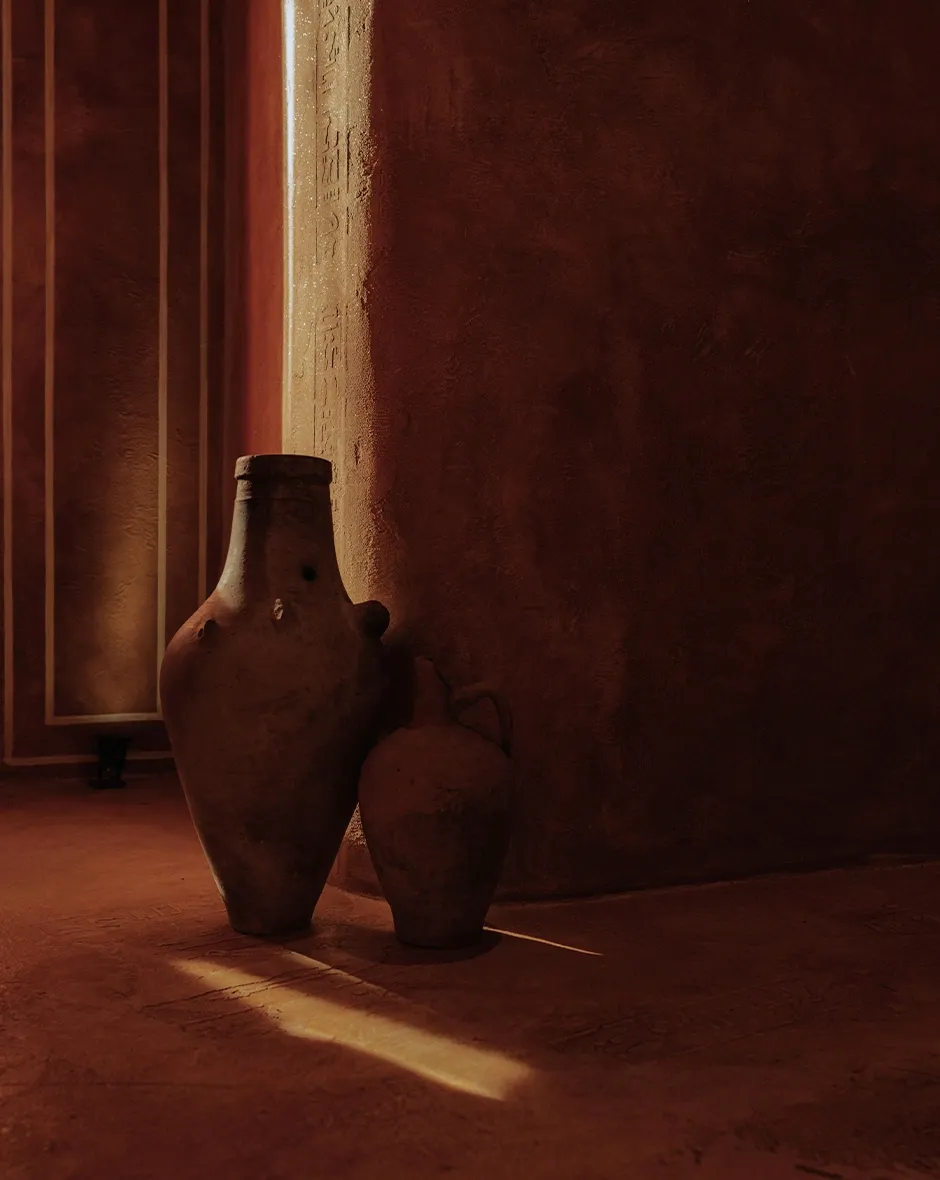
- Textures: from smooth to rustic
- Two systems: Clay® Wall for dry rooms, Clay® Hydro+ for bathrooms and showers
- Colors: a nature-inspired palette, plus custom shades through Paint to Sample
- VOC-free: no solvents, breathable
- Goes over: drywall, cement board and plaster, once primed
- Guarantee: 3 years in writing, product and application
Finish or texture: what's the difference?
The two words get used as if they meant the same thing, but they describe different things:
- Finish is how the surface looks and how it handles light: matte, soft sheen, cloudy, uniform.
- Texture is what your hand feels and how deep the shadows are when light grazes the wall.
Every Clay® texture shares the same matte, mineral finish. What changes is the texture, and with it the amount of shadow the wall throws. That is why the same color can look calm when smooth and dramatic when rustic.
From smooth to rustic: what each texture looks like
Smooth: flat, quiet, velvety
A continuous surface with almost no relief. In daylight it reads as soft color rather than as "plaster". It is the closest Clay® gets to a painted wall, without the plastic look of paint.
- Feels like: soft, even, cool to the touch
- Works in: bedrooms, home offices, minimalist living rooms, bright apartments
- Watch out for: a smooth finish shows what is underneath. Over a patched or wavy drywall wall, the substrate has to be leveled first.
Softly textured: balanced, with a gentle movement
A refined surface with subtle variation, the one most people picture when they think of a clay wall. It hides small imperfections better than a smooth finish and still looks calm.
- Feels like: warm, organic, slightly irregular
- Works in: living and dining rooms, hallways, boutique hotels, open-plan spaces
- Good to know: a soft texture is the safest choice if you are unsure. It flatters most colors and forgives small dents better.
Layered: handcrafted, with depth
Visible trowel layers with real depth. Light picks out every pass of the trowel, so the wall changes through the day.
- Feels like: textured, artisanal, expressive
- Works in: feature walls, restaurants, wellness spaces, entryways
- Good to know: a layered finish reads best on one or two walls, lit from the side by a window or a wall washer.
Rustic: bold and sculptural
A rough, raw surface with deep relief. It is the most dramatic look and the one that pairs best with terracotta and earthy tones.
- Feels like: strong, tactile, rustic
- Works in: statement walls, galleries, rustic or Southwest-style homes, hospitality lobbies
- Watch out for: deep relief catches dust. Avoid it behind a stove or on a narrow hallway wall that hands and bags brush against every day.
Comparing the textures
| Texture | Look | Hides wall flaws | Best rooms | Mood |
|---|---|---|---|---|
| Smooth | Flat, continuous | Least | Bedrooms, offices, minimalist interiors | Calm, simple |
| Softly textured | Subtle variation | Some | Living rooms, hallways, hotels | Natural, understated |
| Layered | Visible layers | Good | Feature walls, restaurants, spas | Handcrafted, warm |
| Rustic | Raw, deep relief | Most | Statement walls, galleries, rustic homes | Dramatic, sculptural |
How to choose for your room
Start with the light. A wall that gets raking light from a window or a ceiling spotlight will exaggerate any texture. In a north-facing room or under even overhead lighting, a layered or rustic texture looks flatter than it does in a photo. Ask your applicator to show you the texture at the angle of your own light.
Then look at the wall. Many US homes have drywall with taped seams, nail pops or an orange-peel texture from a previous paint job. Every Clay® system starts with preparing and priming the substrate, but if you know the wall is far from flat, a soft or layered texture will give you a better result for the same preparation than a smooth one.
Think about daily wear. Clay® stands up to everyday use without dusting the way traditional clay plaster does, but deep textures collect dust and fingerprints show more on dark, smooth surfaces. For a busy hallway or a kids' room, a soft texture in a mid-tone is the practical choice.
Match the system to the room. In living areas and bedrooms the Clay® Wall system is enough. In bathrooms, around a vanity or in a shower, the texture is applied with Clay® Hydro+, the system formulated for wet areas. Smoother textures are easier to wipe down near water. See clay bathrooms and clay plaster showers.
Color and texture work together
Texture changes how a color reads:
- Smooth with soft neutrals (Almond, pale grays, warm whites) feels serene and spacious.
- Soft or layered textures with greens and sage tones brings a quiet, natural feel to living rooms and studies.
- A rustic texture in terracotta, ochre or sand has the warmth of adobe and Mediterranean walls.
- Layered or rustic textures in deep accents (dark greens, charcoal, purples) creates a gallery-like feature wall.
The full palette and how light affects each family are in clay plaster colors.
What clay finishes can and can't do
Clay finishes have a reputation for being beautiful but delicate. Traditional clay plaster does not set like cement or gypsum: it stays soft, which is part of its charm and the reason it is not used where water runs or stands.
Clay® was developed to close that gap. It is formulated to resist everyday wear without cracking or dusting, and its Hydro+ version is designed for bathrooms and showers, where it goes over a waterproofing membrane and is sealed. It is still a wall finish, not a floor: for floors, countertops and heavy-traffic surfaces, Topcret's microcement systems are the right choice.
Clay finishes compared with other decorative walls
| Finish | Look | Where it goes | Upkeep |
|---|---|---|---|
| Paint | Flat color, uniform | Anywhere dry | Repaint every few years |
| Limewash | Cloudy, chalky | Dry interiors and masonry | Recoat as it wears |
| Venetian plaster | Polished, marble-like sheen | Dry interiors, feature walls | Wax or reseal |
| Clay® | Matte, mineral, smooth to rustic | Walls and ceilings; bathrooms and showers with Hydro+ | Dust or wipe with a damp cloth |
More comparisons: microcement vs limewash · microcement vs Venetian plaster · microcement vs tadelakt.
How a Clay® finish is applied
A certified applicator visits the site, checks the substrate and recommends the system. The wall is primed, then a base coat goes on and, once dry, the finishing coat that creates the texture: circular or linear trowel strokes depending on the texture you chose. The whole sequence usually takes about two days. The steps are explained in how Clay® is applied.
FAQs
What is the difference between a clay finish and a clay texture?
The finish is how the surface looks and reflects light; the texture is how deep the relief is. Clay® has one matte mineral finish in different textures, from smooth to rustic.
Which clay texture is best for a bedroom?
A smooth or softly textured finish. It keeps the room calm and diffuses light softly. Keep rustic textures for a single feature wall.
Can a clay finish go over drywall?
Yes. The drywall is repaired, cleaned and primed first. If the wall is uneven, a soft or layered texture hides more than a smooth one.
Can I use a clay finish in a bathroom?
Yes, with the Clay® Hydro+ system, which is formulated for wet areas. Good ventilation still matters, as it does for any bathroom finish.
Do textured clay walls collect dust?
Deeper, rustic textures hold more dust than smoother ones. A soft brush or a dry microfiber cloth is enough to clean them.
Can I see the textures before choosing?
Yes. Ask your applicator to show you the textures in your color: a photo on a screen can't show how your own light will hit the relief. Request a quote.
Request a quote
Tell us about your project
A few quick questions and we will get back to you with a tailored proposal.
Email or call us
The quote form needs JavaScript. You can also contact us directly:
A rough figure is fine.
Optional
Where are you based?
Your handle or a link to the profile.
Your contact details
Last step: we will email or call you with our answer.
Please wait a moment…
Preview: the HubSpot form is embedded here. No data is sent in this demo.
We could not load the last step
Email or call us and we will get back to you all the same:
Thank you for your interest
We have received your enquiry. A Topcret advisor will be in touch with you very soon.
Preview complete
This is a demo: no data was sent and nobody will receive this enquiry.
Success Stories
Real projects, real results.






What our clients say
- Topcret helped me doing a repair on my existing floor, and went the distance to get a good result. I would definitely use them againGillian D.★★★★★ (opens in a new tab)
- Jack and the team at Topcret were top-draw. We're beyond pleased with the finished look, but also very impressed with the experience. From our 1st meeting to the aftercare, Topcret were nothing but professional, knowledgable, friendly and flexible. Highly recommend.Sam S.★★★★★ (opens in a new tab)
- Topcret and Juan in particular went above and beyond. Juan worked long days to finish the project as soon as possible, and used his technical knowledge and expertise to problem-solve some of the issues we had with previous tradesmen's mistakes. So happy Topcret could match the paint colour we wanted and that the result is more of an even finish than the typical microcement mix of shades (which they can do as well - we just didn't want that look). Delighted with the result and would definitely use them again. Thank you so much!Isabel D.★★★★★ (opens in a new tab)
- We had our kitchen and bathrooms done in our house in Sydney. The team was very friendly and efficient and the end result was exactly what we wanted. Can’t recommend them enough!Carolina R.★★★★★ (opens in a new tab)
- Topcret’s attention to detail and overall quality of their work is exceptional. I am pleased with the results and would highly recommend Topcret to anyone in need of their services.Rodrigo T.★★★★★ (opens in a new tab)
- Jack has been incredibly helpful in answering all my inquiries since I’ve first visited the showroom. He also made sure that all the technical queries that were put forth from the architects were addressed and proposed solutions to better fit the material. I couldn't be happier, and would recommend 100%.Liza M.★★★★★ (opens in a new tab)
- I recently hired Topcret to finish the renovation on my kitchen and couldn’t be happier with the results. The transformation they've made is just incredible. Provided high quality work with great attention to detail. I would recommend Topcret to anyone looking to make their spaces more attractive!Francesco N.★★★★★ (opens in a new tab)
- Love the product and great customer service. I decided to go for a warm terracotta and Top Cret were very happy to accommodate to develop my own colour.Jacqui P.★★★★★ (opens in a new tab)
- Really happy with the quality of work Topcret have provided for my home. They did 2 Bathrooms, floors and walls which were finished in just 3 days. Jack was extremely helpful throughout the process, answering the many questions I had for him. Great product/ service, I will be recommending to everyone.Tommy J.★★★★★ (opens in a new tab)