
Clay plaster finishes and textures: how to choose the right one
The colour of a clay wall is what people notice first. The texture is what they remember. The same shade can look calm and almost suede-like when trowelled smooth, or earthy and rugged with a deep, layered relief. Choosing the texture is half the design.
Clay® by Topcret is trowelled by hand, and its texture can range from smooth to rustic. This guide explains what each look is like, how it behaves in Australian light, how well it copes with everyday wear, and which suits each room.
In short: Clay® textures run from smooth and velvety, through soft movement and visible hand-trowelled layers, to bold and rustic. Smoother textures suit calm rooms and are easiest to wipe; deeper ones hide marks and turn a single wall into a feature. Every texture is matte.
Request a quote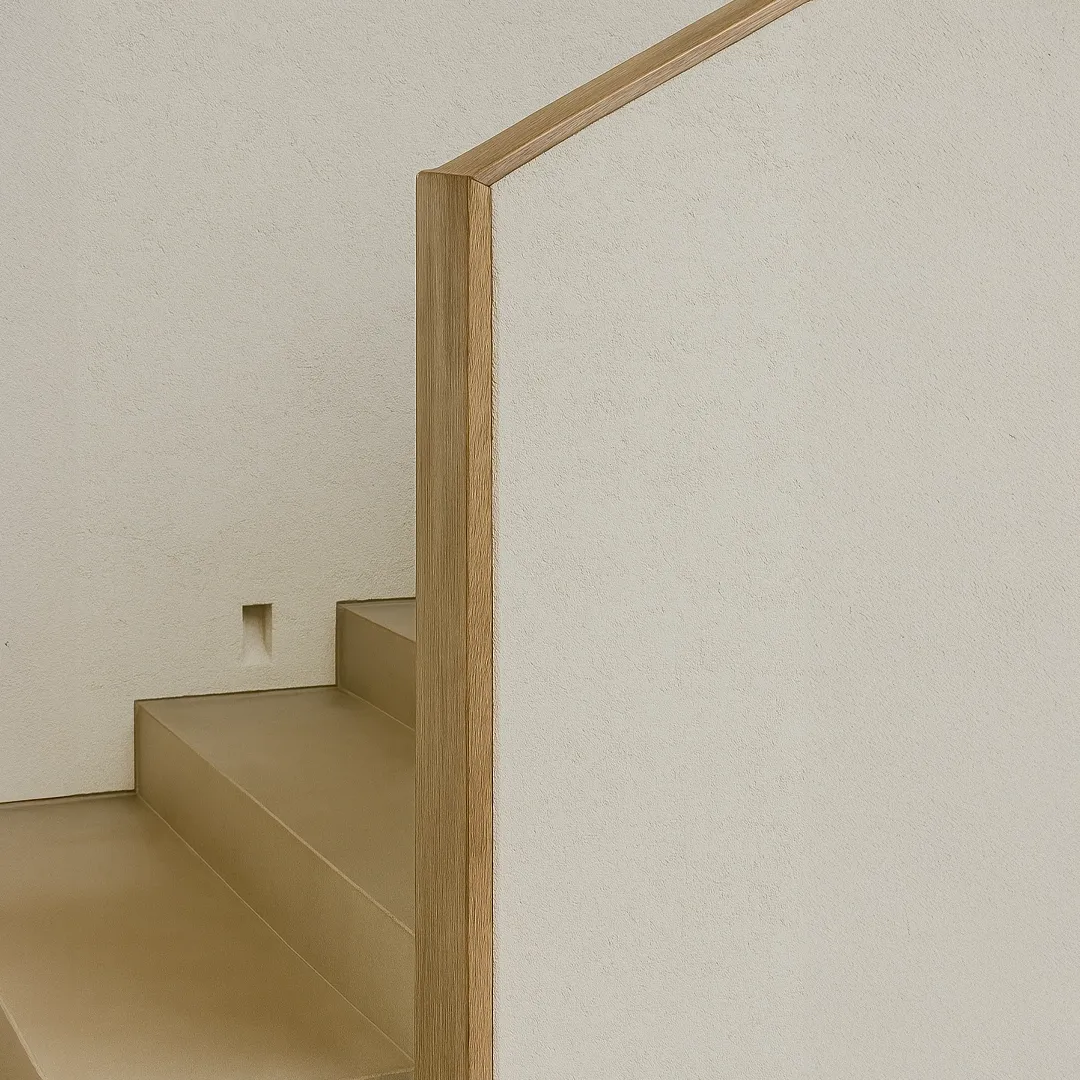
- Textures: from smooth to rustic
- Sheen: matte in every texture
- Thickness: typically 2–10 mm; deeper textures sit at the thicker end
- Systems: Wall (dry rooms) and Hydro+ (humid rooms)
Finish or texture: what's the difference?
The two words get used as if they meant the same thing. They don't, quite:
- Finish is how the surface looks and how it handles light: matte or glossy, flat or soft.
- Texture is what your hand feels: how much relief, depth and shadow the surface has.
All Clay® textures share the same finish: a dry, mineral matte that diffuses light rather than reflecting it. What changes from smooth to rustic is the texture.
From smooth to rustic: the main looks
Smooth
- Look and feel: flat, continuous, velvety under the hand
- Mood: calm, minimal, quiet
- Best for: bedrooms, studies, minimalist living rooms, bathroom walls
- Watch out for: on long walls grazed by strong side light, a smooth surface shows every undulation of the wall behind it, so the base has to be straight
Soft movement
- Look and feel: a soft, cloudy movement across the wall
- Mood: natural, relaxed, versatile
- Best for: open-plan living areas, hallways, hotel rooms and offices
- Why people choose it: it is the safest choice when you are unsure, and it hides small marks better than a smooth finish
Layered
- Look and feel: visible trowel strokes and layers, more depth
- Mood: handcrafted, warm, full of character
- Best for: feature walls, dining rooms, restaurants and cafés, wellness spaces
- Why people choose it: it brings out earthy colours, because the shadows between layers deepen the tone
Rustic
- Look and feel: strong relief, raw and sculptural
- Mood: bold, organic, dramatic
- Best for: a statement wall, a bedhead wall, a fireplace surround, a reception area
- Watch out for: it is the hardest to wipe clean, so keep it away from splash zones
Comparing the textures
| Texture | Look | Hides marks | Easy to wipe | Typical place |
|---|---|---|---|---|
| Smooth | Flat, velvety | Low | High | Bedrooms, bathrooms |
| Soft movement | Cloudy | Medium | High | Living areas, hallways |
| Layered | Layered depth | High | Medium | Feature walls, dining |
| Rustic | Bold relief | High | Low | Statement walls |
«Hides marks» and «easy to wipe» are practical guidance from how relief behaves, not lab ratings.
How the textures behave in Australian light
Australian houses get strong light, and it changes the way a clay wall reads more than any other factor.
- Low winter sun coming through a north-facing window grazes the wall and lights up every ridge. On a layered or rustic wall that is the moment it looks best; on a smooth wall it reveals any unevenness in the base.
- Skylights and high ceilings, common in renovated federation homes and Queenslanders, throw light down the wall from above. Medium and layered textures soften that light and stop the wall looking flat.
- Warm LED downlights at night bring out ochres and terracottas; cooler light makes greys and olives look crisper.
The practical rule: look at your sample on the actual wall, in the morning and at night, before you decide.
Texture and wear: picking for real life
- Homes with kids or pets: soft movement or layered. Small knocks and scuffs disappear into the texture.
- Hallways and entries: soft movement or layered, plus a sealer where bags and bikes brush the wall.
- Rental or holiday properties: soft movement, the most forgiving to clean and to repair.
- Bathroom and laundry walls: the Hydro+ system; the smoother the surface, the easier it is to wipe down.
- Feature walls nobody touches: anything goes; a rustic texture is at its best here.
Clay® next to other plaster finishes
Some clay and lime plasters are burnished to a soft sheen, in the Japanese or Venetian tradition. Clay® is not one of them: it stays matte in every texture. If you are after gloss, look at a polished lime or Venetian plaster. If you want the warmth of earth with a dry, natural surface, clay is the right family. How microcement compares with these finishes is covered in microcement vs Venetian plaster and microcement vs tadelakt.
Colour and texture together
Texture changes colour. A smooth finish shows a shade at its truest and calmest. Layered and rustic textures add shadow, so the same colour looks a little deeper and earthier. Pale neutrals usually suit smoother textures; terracottas, ochres and deep greens come alive in layered and rustic ones. More in clay plaster colours (nueva).
Seeing the textures before you choose
Ask your applicator for samples of your shortlisted colour in two textures and put them up on the wall you are planning to coat.
FAQs
What is the most popular clay plaster texture?
A texture with soft movement is the most versatile: it has enough movement to feel handmade and hide small marks, and it is still easy to keep clean.
Can clay plaster be smooth?
Yes. A smooth texture is flat and velvety, with no visible trowel marks, while keeping the matte, mineral look of clay.
Is clay plaster shiny?
No. Clay® is matte in every texture. Burnished lime and Venetian plasters are the finishes to look at if you want sheen.
Which texture is best for a bathroom?
The Hydro+ system, in a smoother texture: it is easier to wipe down in a splash zone.
Can I mix textures in the same room?
Yes. A common approach is a smoother texture on most walls and a layered or rustic one on a single feature wall, in the same colour.
Request a quote
Tell us about your project
A few quick questions and we will get back to you with a tailored proposal.
Email or call us
The quote form needs JavaScript. You can also contact us directly:
A rough figure is fine.
Optional
Where are you based?
Your handle or a link to the profile.
Your contact details
Last step: we will email or call you with our answer.
Please wait a moment…
Preview: the HubSpot form is embedded here. No data is sent in this demo.
We could not load the last step
Email or call us and we will get back to you all the same:
Thank you for your interest
We have received your enquiry. A Topcret advisor will be in touch with you very soon.
Preview complete
This is a demo: no data was sent and nobody will receive this enquiry.
Success Stories
Real projects, real results.


What our clients say
- Topcret helped me doing a repair on my existing floor, and went the distance to get a good result. I would definitely use them againGillian D.★★★★★ (opens in a new tab)
- Jack and the team at Topcret were top-draw. We're beyond pleased with the finished look, but also very impressed with the experience. From our 1st meeting to the aftercare, Topcret were nothing but professional, knowledgable, friendly and flexible. Highly recommend.Sam S.★★★★★ (opens in a new tab)
- Topcret and Juan in particular went above and beyond. Juan worked long days to finish the project as soon as possible, and used his technical knowledge and expertise to problem-solve some of the issues we had with previous tradesmen's mistakes. So happy Topcret could match the paint colour we wanted and that the result is more of an even finish than the typical microcement mix of shades (which they can do as well - we just didn't want that look). Delighted with the result and would definitely use them again. Thank you so much!Isabel D.★★★★★ (opens in a new tab)
- We had our kitchen and bathrooms done in our house in Sydney. The team was very friendly and efficient and the end result was exactly what we wanted. Can’t recommend them enough!Carolina R.★★★★★ (opens in a new tab)
- Topcret’s attention to detail and overall quality of their work is exceptional. I am pleased with the results and would highly recommend Topcret to anyone in need of their services.Rodrigo T.★★★★★ (opens in a new tab)
- Jack has been incredibly helpful in answering all my inquiries since I’ve first visited the showroom. He also made sure that all the technical queries that were put forth from the architects were addressed and proposed solutions to better fit the material. I couldn't be happier, and would recommend 100%.Liza M.★★★★★ (opens in a new tab)
- I recently hired Topcret to finish the renovation on my kitchen and couldn’t be happier with the results. The transformation they've made is just incredible. Provided high quality work with great attention to detail. I would recommend Topcret to anyone looking to make their spaces more attractive!Francesco N.★★★★★ (opens in a new tab)
- Love the product and great customer service. I decided to go for a warm terracotta and Top Cret were very happy to accommodate to develop my own colour.Jacqui P.★★★★★ (opens in a new tab)
- Really happy with the quality of work Topcret have provided for my home. They did 2 Bathrooms, floors and walls which were finished in just 3 days. Jack was extremely helpful throughout the process, answering the many questions I had for him. Great product/ service, I will be recommending to everyone.Tommy J.★★★★★ (opens in a new tab)