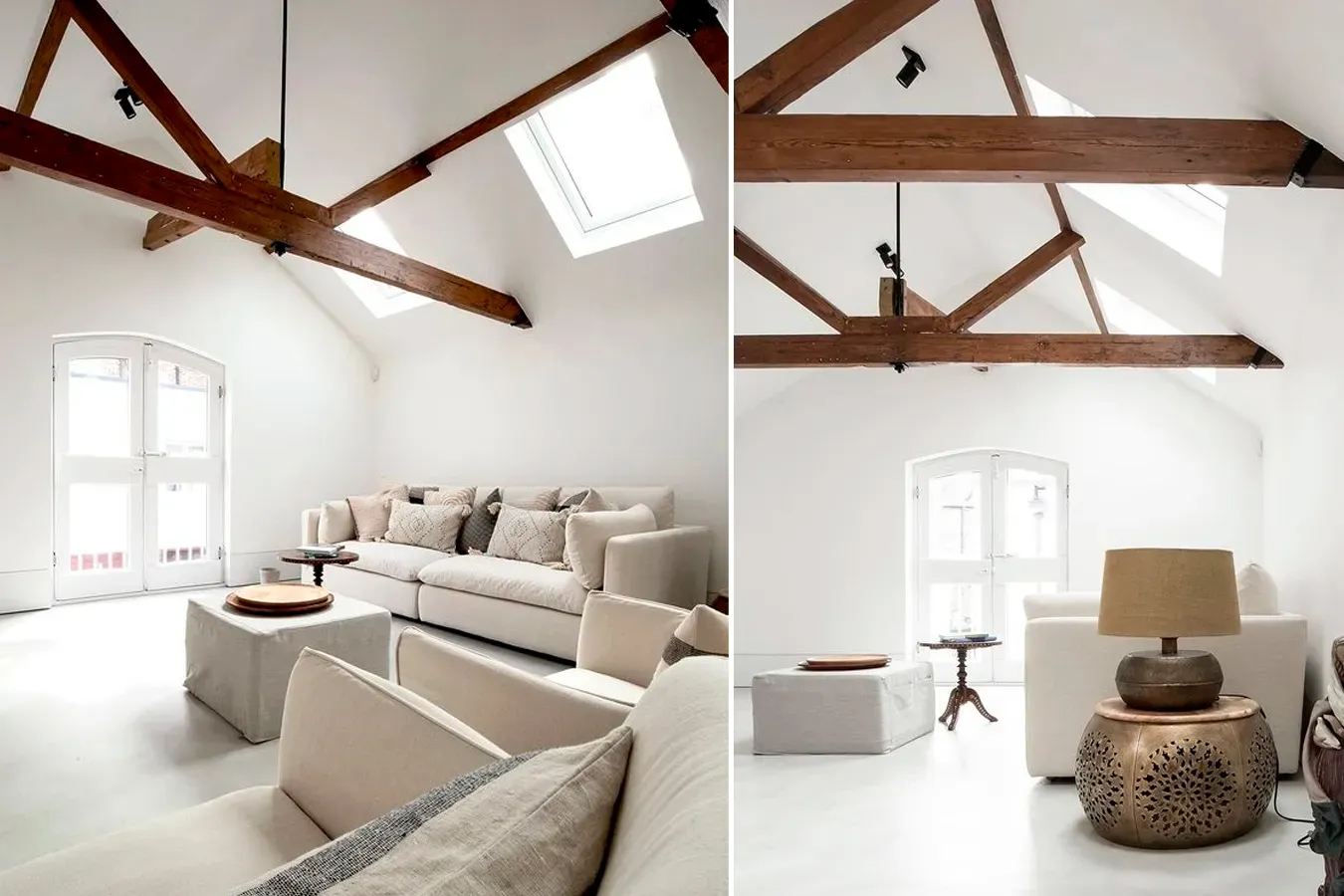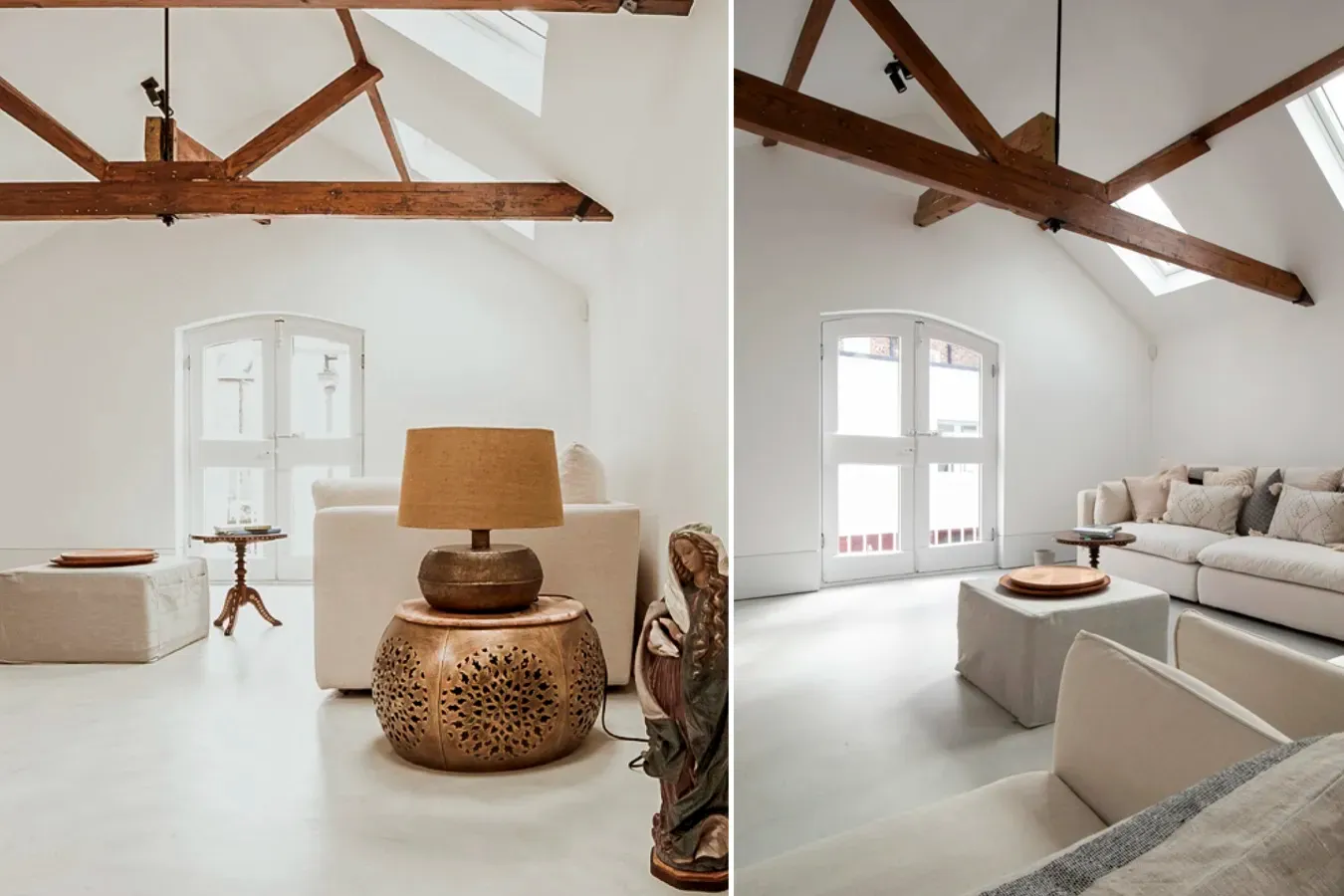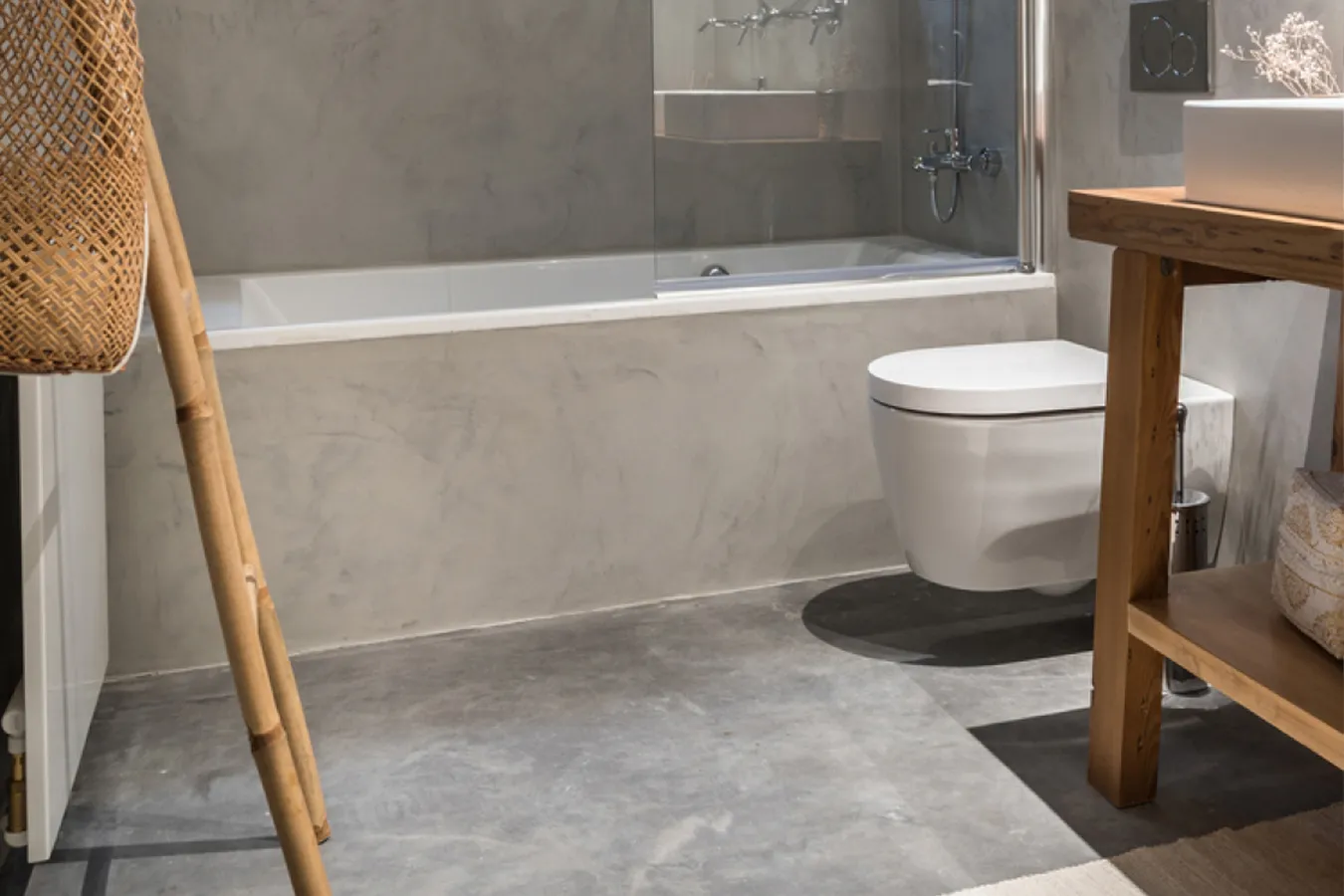
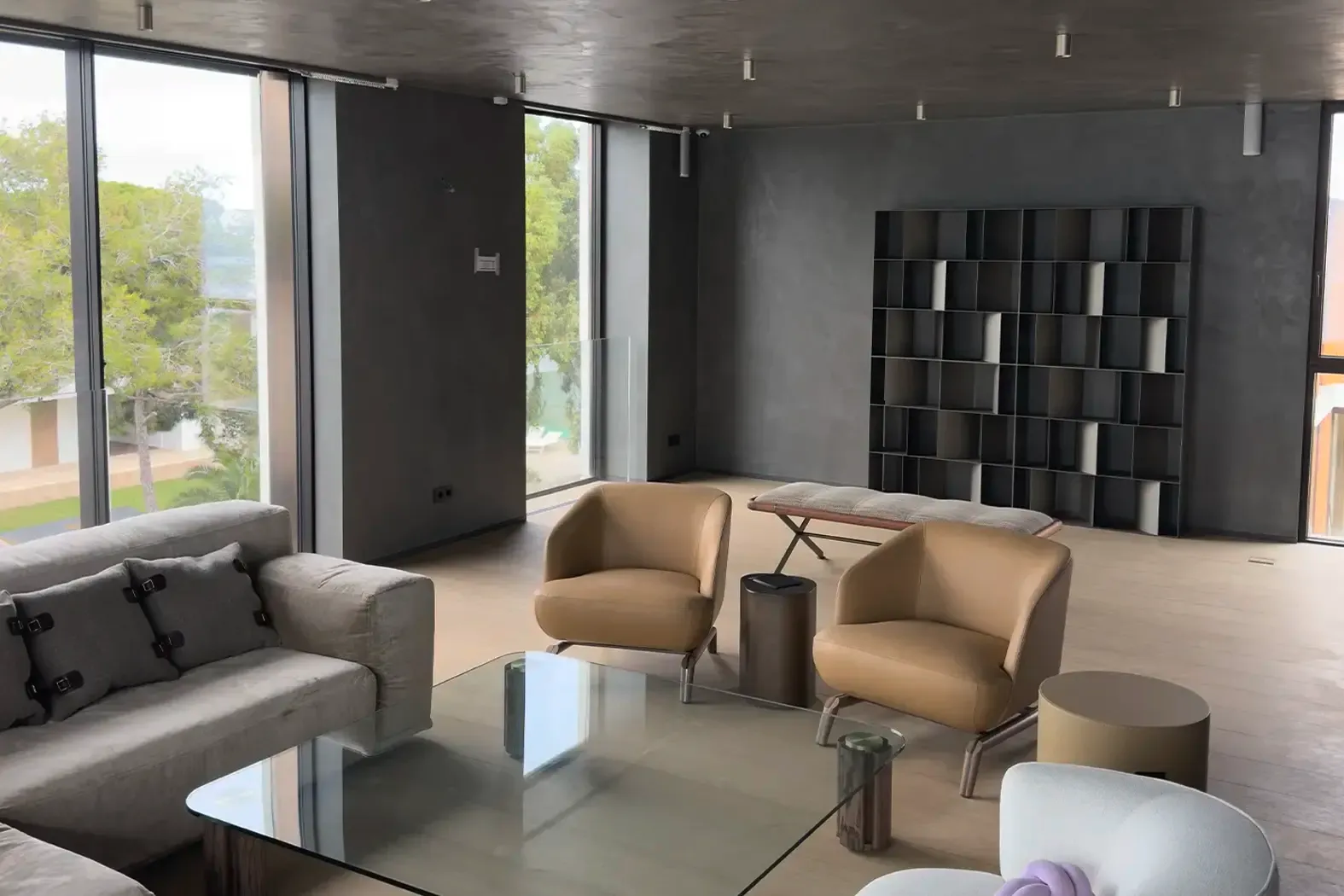
Limewash is back on Australian walls, from painted-over face brick in a 1970s house to the soft, chalky look of a coastal renovation. Microcement shows up in the same mood boards. They can look alike in a photo, but they are very different materials, and the room you are finishing usually decides between them.
In short: choose limewash for dry walls and brick, inside or out, where you want a soft, chalky, breathable finish and don't mind touching it up. Choose microcement where the surface gets wet, scrubbed or walked on: showers, floors, splashbacks and benchtops. Installed, Topcret microcement costs A$160–290 per m² in Australia.
- Limewash: mineral paint of slaked lime and water, brushed on in thin coats
- Microcement: cement and polymer coating, about 2 mm, trowelled in layers and sealed
- Wet areas: microcement, sealed, over a membrane to AS 3740; limewash stays out of the shower
- Floors and benchtops: microcement only
- Microcement installed: A$160–290 per m², materials and labour
What limewash is
Limewash is one of the oldest wall finishes there is. Limestone is burnt and slaked into lime, then thinned with water and pigment into a paint you brush on in several coats. It soaks into porous surfaces such as brick, render and stone rather than forming a film on top, so it leaves a matte, mottled finish that changes with the light and lets the wall breathe.
That is its charm and its limit. Limewash chalks a little to the touch, marks if you scrub it, and weathers over time, so most people recoat it every few years, especially outside.
What microcement is
Microcement is a thin cement-based coating applied by trowel in layers that come to roughly 2 mm, then sealed. Polymers make it grip the surface underneath and pigments colour it all the way through. The result is a continuous, joint-free surface that can run from the floor up the wall and onto a vanity or a benchtop. It goes over sound tiles, concrete, render and plasterboard, so it is often used to renovate without demolition.
Microcement vs limewash, side by side
| Limewash | Microcement | |
|---|---|---|
| Look | Matte, chalky, cloudy movement | Matte to satin, stone-like, seamless |
| Feel | Powdery, can rub off on clothes | Smooth or lightly textured, sealed |
| Breathability | High, suits old masonry | Lower once sealed |
| Water | Fine with occasional splashes on dry walls | Water-resistant once sealed; membrane underneath in showers |
| Wear | Marks and fades, recoated over time | Hard-wearing; resists everyday stains once sealed |
| Surfaces | Walls and ceilings only | Walls, floors, showers, benchtops, furniture, stairs |
| Who applies it | Often DIY | Certified applicator |
| Cost | Low per m² for materials | A$160–290 per m² installed |
Which one for each surface
Dry living walls and bedrooms. Both work. Limewash gives the softer, more rustic look and is the cheaper of the two; microcement gives a cleaner stone effect that copes better with hands, chairs and kids.
Face brick, inside. This is where limewash shines. It lets the shape of the bricks and the mortar lines show through, which is the whole point of limewashing a brick feature wall. Microcement needs a flat surface, so the brick texture disappears under a smooth finish; your applicator assesses how the brick has to be prepared first.
Brick façades and outdoor walls. Limewash has been used on masonry façades for centuries and lets the wall dry out. Microcement can be used outdoors, but the base has to be waterproofed and detailed so that damp never reaches the coating, and the Australian sun and coastal salt air make the choice of system and sealer matter. See outdoor microcement.
Plasterboard walls. Microcement goes on primed plasterboard with mesh in the first coat. Limewash needs a mineral, porous surface, so on plasterboard or painted walls it usually needs a dedicated primer first; follow the limewash maker's instructions.
Bathroom walls outside the shower. Limewash can take steam and the odd splash in a well-ventilated room, but it will mark behind the basin. Sealed microcement handles it better.
Shower recesses, floors, splashbacks and benchtops. Microcement. Limewash isn't made for standing water, foot traffic or kitchen spills. In Australian wet areas a waterproofing membrane to AS 3740 goes on before any finish; microcement is the finish, not the membrane.
A third option: Clay® for a natural, breathable wall
If what you love about limewash is the matte, earthy look, but you want something tougher than a chalky paint, look at Clay®. It is Topcret's natural clay wall finish, cement-free and breathable, trowelled on like a plaster rather than brushed on like a paint. For bathrooms there is Clay® for bathrooms.
Using both in the same house
You don't have to pick one for the whole home. A common plan: limewash on the face-brick feature wall in the living room and on bedroom walls, microcement on the bathroom, the ensuite and the kitchen splashback, and a microcement floor tying the open-plan areas together. Choose colours from the same warm, chalky family and the two materials read as one scheme.
What it costs
Limewash is the cheaper finish: the material costs little and many people apply it themselves, although it needs recoating over the years. Installed by a certified Topcret applicator, microcement costs A$160–290 per m² in Australia, including preparation, mesh and sealer. A 10 m² feature wall works out at roughly A$1,600–2,900 at those rates. Full breakdown: how much microcement costs in Australia.
Living with each finish
Limewash: dust it, don't scrub it, and expect to recoat high-touch areas from time to time. Patches blend in easily, which is part of its appeal.
Microcement: wipe it with a damp cloth and a pH-neutral cleaner. Avoid abrasive pads and harsh solvents, and have the sealer refreshed when your applicator advises it. A hairline crack can appear if the wall behind it moves, which is why joints are reinforced with mesh; more in microcement problems.
FAQs
Is limewash or microcement cheaper?
Limewash, by a wide margin, especially if you apply it yourself. Microcement costs more because it is a multi-layer system installed by a trained applicator.
Can you use limewash in a bathroom?
On walls away from the shower, in a well-ventilated room, yes. Inside the shower recess, no: use a finish made for wet areas over an AS 3740 membrane.
Can microcement go over a limewashed wall?
Not directly. Limewash is powdery and doesn't give a sound base, so it has to be removed or stabilised first. Your applicator will assess the wall.
Does limewash work on brick?
Yes. Brick is one of the best surfaces for it, inside and out, because the lime soaks in and the texture of the bricks still shows.
Which looks more natural?
Limewash has the softer, more irregular look. Microcement looks more like stone or concrete. Clay® sits in between.
Find a certified installer near you
Explore Topcret service information for these Australian cities. Each page covers the local service area and how to request a quote.