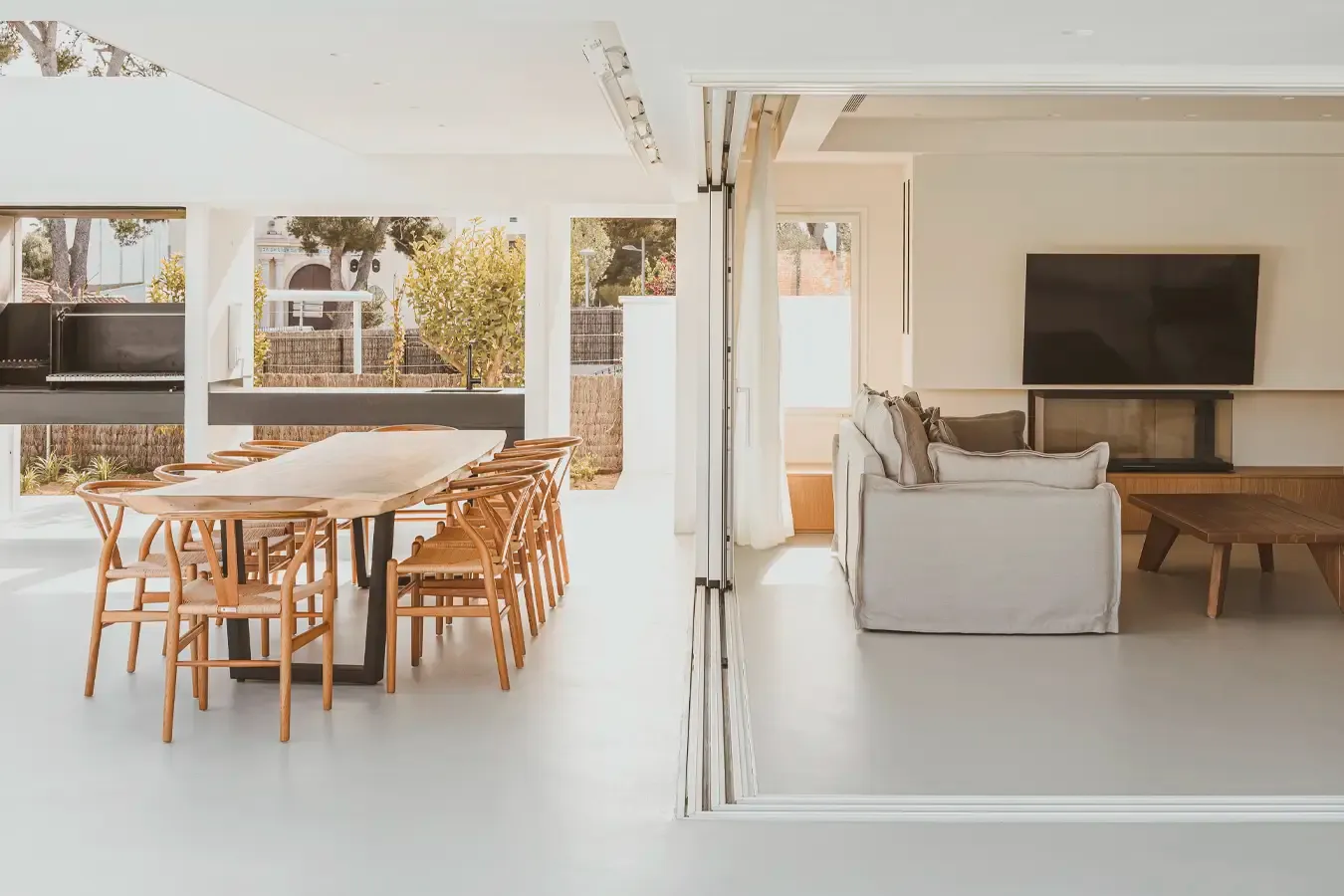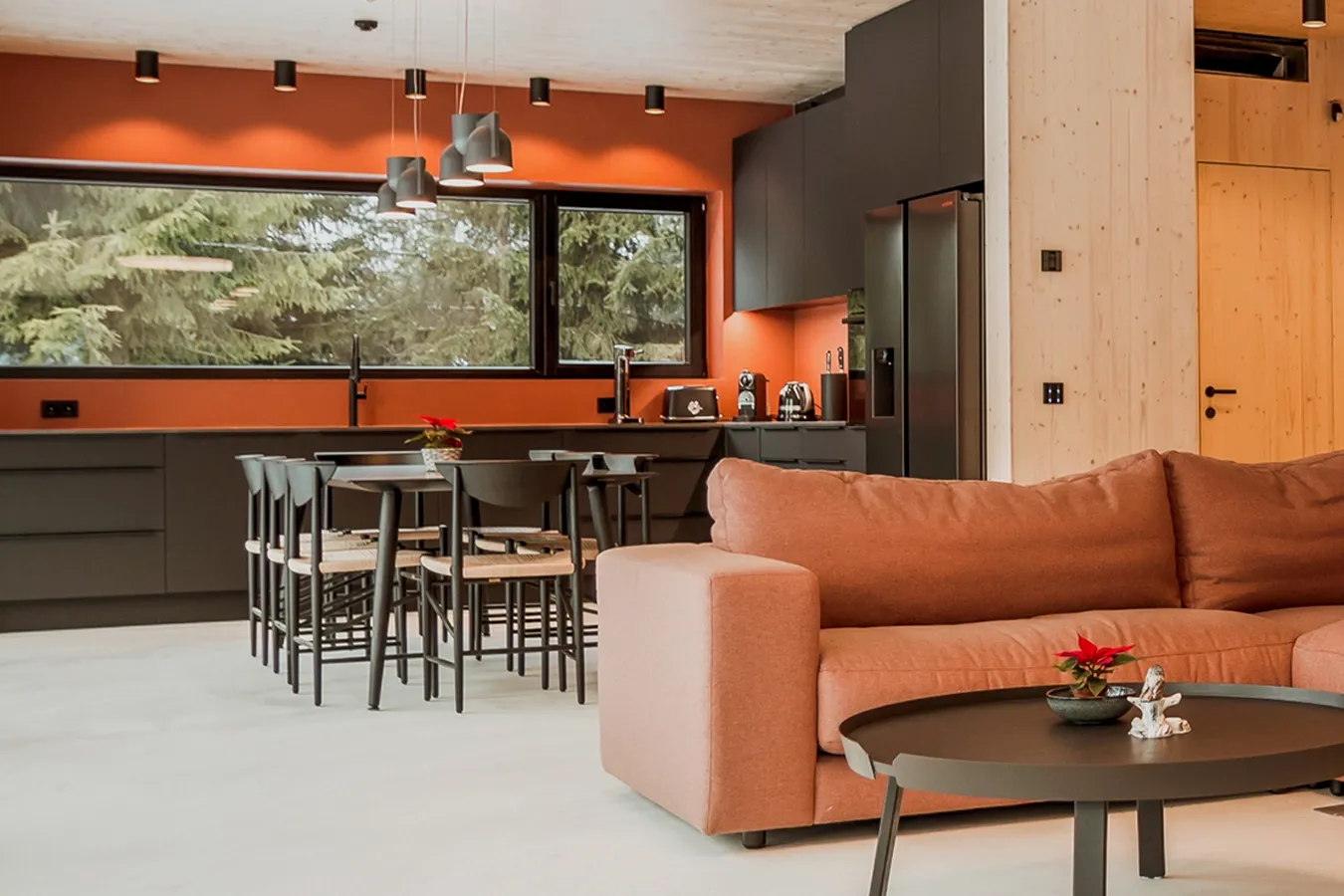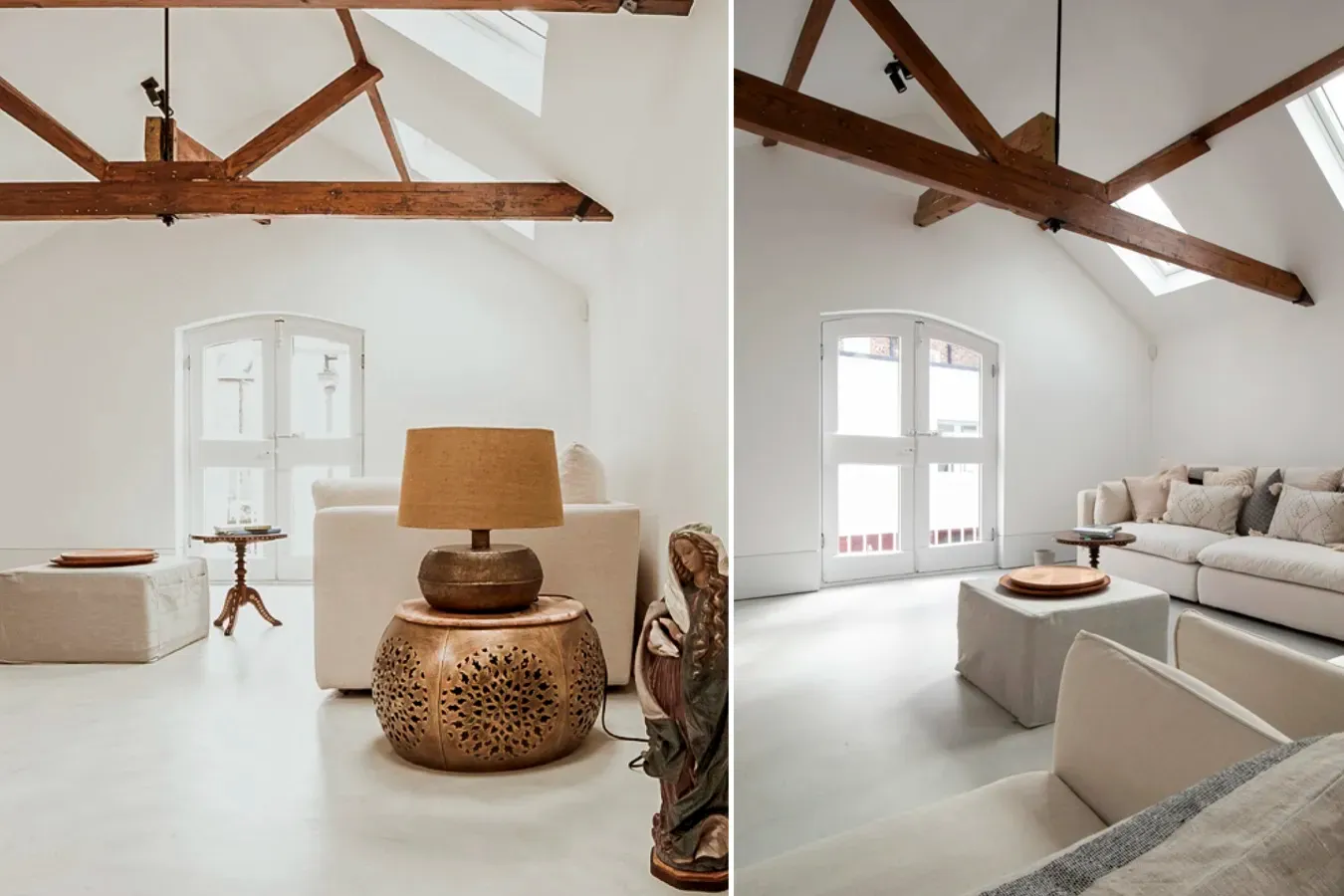
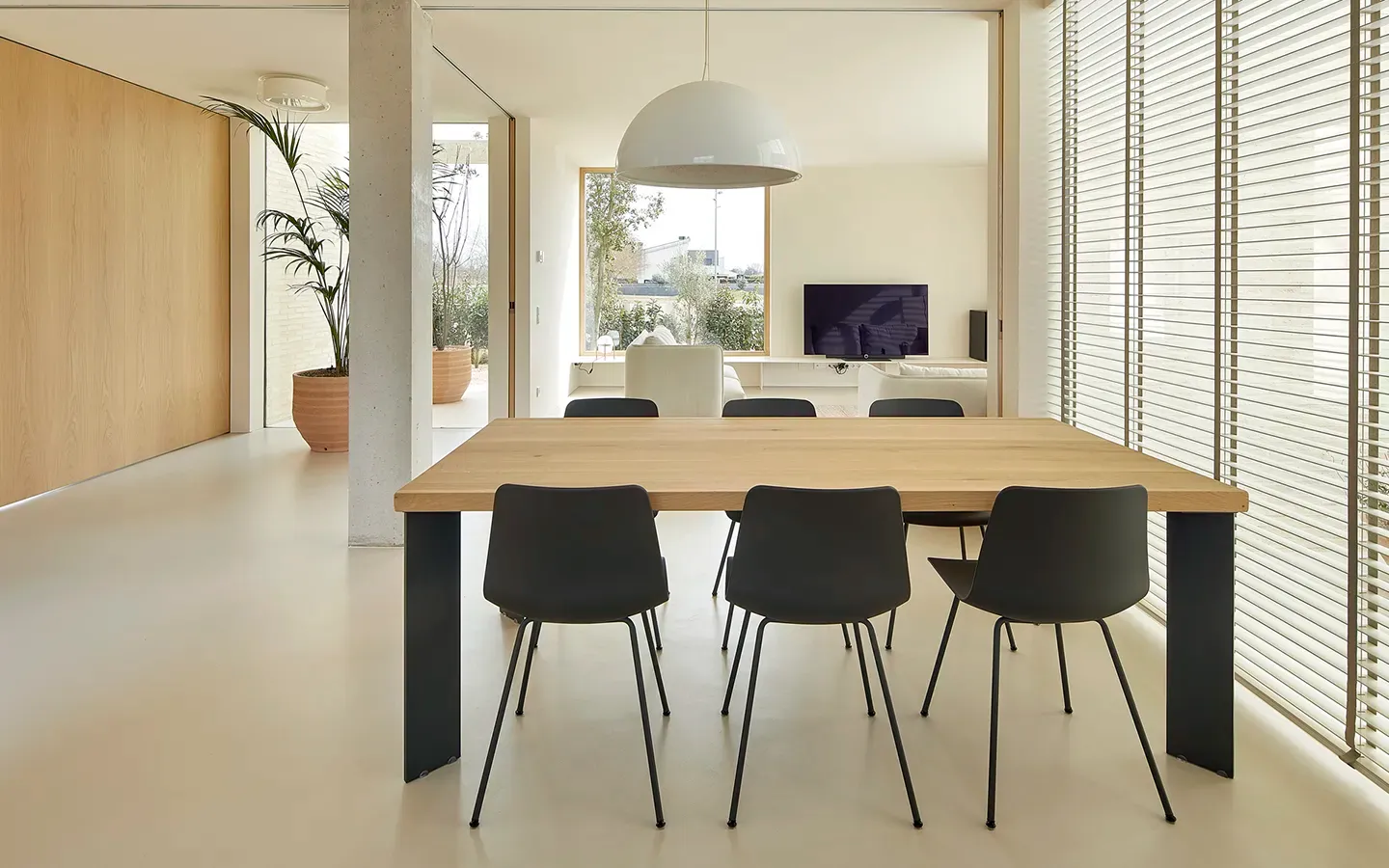
Limewash and microcement both give walls a soft, mineral, hand-finished look, and both are having a moment in British interiors. That is where the similarity ends. Limewash is a traditional, breathable lime paint that has been used on old buildings for centuries. Microcement is a thin cement-based coating that is sealed at the end, tough enough for floors, showers and worktops.
They are not really rivals. They do different jobs, and in a lot of homes the right answer is both, in different rooms.
In short: choose limewash for dry walls where you want a soft, chalky, breathable finish, especially on old solid walls. Choose microcement for floors, bathrooms, showers, kitchens and anywhere that gets wet or knocked. For a breathable, cement-free wall with a natural texture, Topcret's Clay® sits between the two.
What is limewash?
Limewash is made from slaked lime (lime putty) thinned with water, sometimes with natural pigments. It is brushed on in several thin coats and cures by reacting with carbon dioxide in the air, leaving a soft, matte, slightly cloudy finish that changes with the light. It stays porous, so moisture in the wall can escape through it, which is why conservation guidance often recommends lime-based finishes for historic buildings with solid walls.
It is worth knowing that some "limewash paints" sold today are modern paints designed to imitate the look. They don't always behave like traditional limewash, so check what you are buying.
What is microcement?
Microcement is a cementitious coating made from cement, fine aggregate, polymers and pigments, trowelled on by hand in layers that total around 2 mm and sealed at the end. It goes on walls, floors, stairs, worktops and showers, over the existing surface (plaster, plasterboard, tiles, screed), and gives a seamless finish from smooth and polished to textured. More in what microcement is.
Microcement vs limewash, side by side
| Microcement | Limewash | |
|---|---|---|
| What it is | Cement-based coating, sealed | Lime and water, a breathable mineral paint |
| Look | Seamless, matte to gloss, subtle trowel movement | Soft, chalky, cloudy, very matte |
| Surfaces | Walls, floors, stairs, showers, worktops, furniture | Walls and ceilings |
| Breathability | Sealed surface, not breathable | Breathable |
| Water | Water-resistant once sealed; over tanking in showers | Not for showers or splash zones |
| Wear | Hard-wearing; takes footfall and knocks | Can rub off on hands and clothes; marks easily |
| Cleaning | Wipe with a pH-neutral cleaner | Can't really be scrubbed; patched with a new coat |
| Upkeep | Sealer renewed from time to time | Recoated every few years |
| Application | Certified applicator, several coats and sanding | Brush-applied; DIY-friendly with care |
| Cost | £85–£150 per m² installed (Topcret, UK) | Lower; mostly labour |
Where each one works best
Choose limewash for
- Dry rooms with a soft, relaxed feel: bedrooms, living rooms, dining rooms, hallways that don't get scuffed.
- Old solid walls and lime plaster. Many pre-1919 British houses have solid brick or stone walls with no cavity. Those walls need to let moisture out, and a breathable finish like limewash helps them do that.
- Exterior masonry on period buildings, where conservation guidance often prefers it. Check with your local conservation officer if the building is listed.
Choose microcement for
- Floors, where limewash simply isn't an option.
- Bathrooms, showers and wet rooms, sealed and laid over a tanking system in wet areas. See microcement bathrooms.
- Kitchens: splashbacks, worktops and islands that need wiping every day. See microcement kitchens.
- Hallways, stairs and busy family spaces where walls get knocked.
- One finish across floor and walls, for a seamless, continuous look.
Be careful with microcement on damp solid walls
A sealed coating on a wall that needs to breathe can trap moisture behind it. If you live in an older property with solid walls, deal with any damp first and ask your applicator whether the wall is suitable. On those walls, a breathable finish may simply be the better choice.
The third option: Clay® for breathable walls
If you love the soft, chalky look of limewash but want something more durable and with more texture, Clay® is Topcret's natural clay finish for walls. It contains no cement and is breathable, so it suits the same dry living spaces where limewash works, with a deeper, more tactile surface. Like microcement, it is applied through Topcret's network of certified applicators. Microcement then takes care of the floors, the bathroom and the kitchen.
What each one costs
Installed by a certified Topcret applicator, microcement costs £85–£150 per m² in the UK, materials and labour included. Limewash costs less: the material is inexpensive and much of the cost is the labour of several thin coats, plus recoating every few years. Over time, the difference narrows on walls that get a lot of wear, because microcement doesn't need repainting. Full breakdown: how much microcement costs.
Living with each finish
Limewash marks and can rub off on clothing, especially in the first weeks. Small marks are usually touched up with a fresh coat rather than cleaned. It ages gently and many people like the patina.
Microcement is wiped with water and a pH-neutral soap; avoid abrasive cleaners, bleach and ammonia, which damage the sealer. The sealer is renewed from time to time on surfaces with heavy use. More in how to clean and maintain microcement surfaces.
Comparing other wall finishes? See microcement vs Venetian plaster and microcement vs tadelakt.
FAQs
Is limewash cheaper than microcement?
Yes, usually. The material is inexpensive and it can be brushed on by a careful DIYer. Microcement costs £85–£150 per m² installed in the UK, but it lasts longer on walls that take wear and doesn't need repainting.
Can you use limewash in a bathroom?
On a well-ventilated bathroom wall away from water, sometimes. Not in a shower or around a bath, where it would wash off. Microcement, sealed and laid over tanking in wet areas, is designed for those surfaces.
Is microcement waterproof?
Once sealed, microcement is water-resistant. In showers and wet rooms, a tanking system goes under it to keep water out of the structure. See is microcement waterproof?
Which looks more natural?
Limewash has the softest, most cloudy look. Microcement looks mineral and hand-made too, with subtle trowel movement, and can be finished matte. Clay® has a natural, textured surface.
Can microcement go over a limewashed wall?
Limewash is powdery and doesn't give a sound base. It has to be removed before microcement is applied.
Can I use both in the same house?
Yes, and it often works well: limewash or Clay® on dry walls in bedrooms and living spaces, microcement on floors, bathrooms and the kitchen.