
Microcement Sealer: Protecting Your Surface in Australian Conditions
Microcement gets its looks from the trowel and its staying power from the sealer. Cement is naturally porous, so without a sealer water, oil and dirt soak straight in. The sealer closes that surface, sets the finish (matte, satin or gloss) and takes the daily wear so the microcement underneath doesn't. In Australia it also has to handle strong sun, coastal salt air and showers used twice a day. This guide explains what a sealer does, what it doesn't do, which type suits each part of the house and how to tell when it needs renewing.
In short: a microcement sealer is the protective top layer applied after the last coat of microcement. Topcret's system uses a sealer followed by a finishing varnish, preferably two coats of each. It protects against water, stains and wear, but it is not a waterproofing membrane: wet areas still need one underneath that meets AS 3740. Foot traffic after 24 hours; full hardness after 21 days.
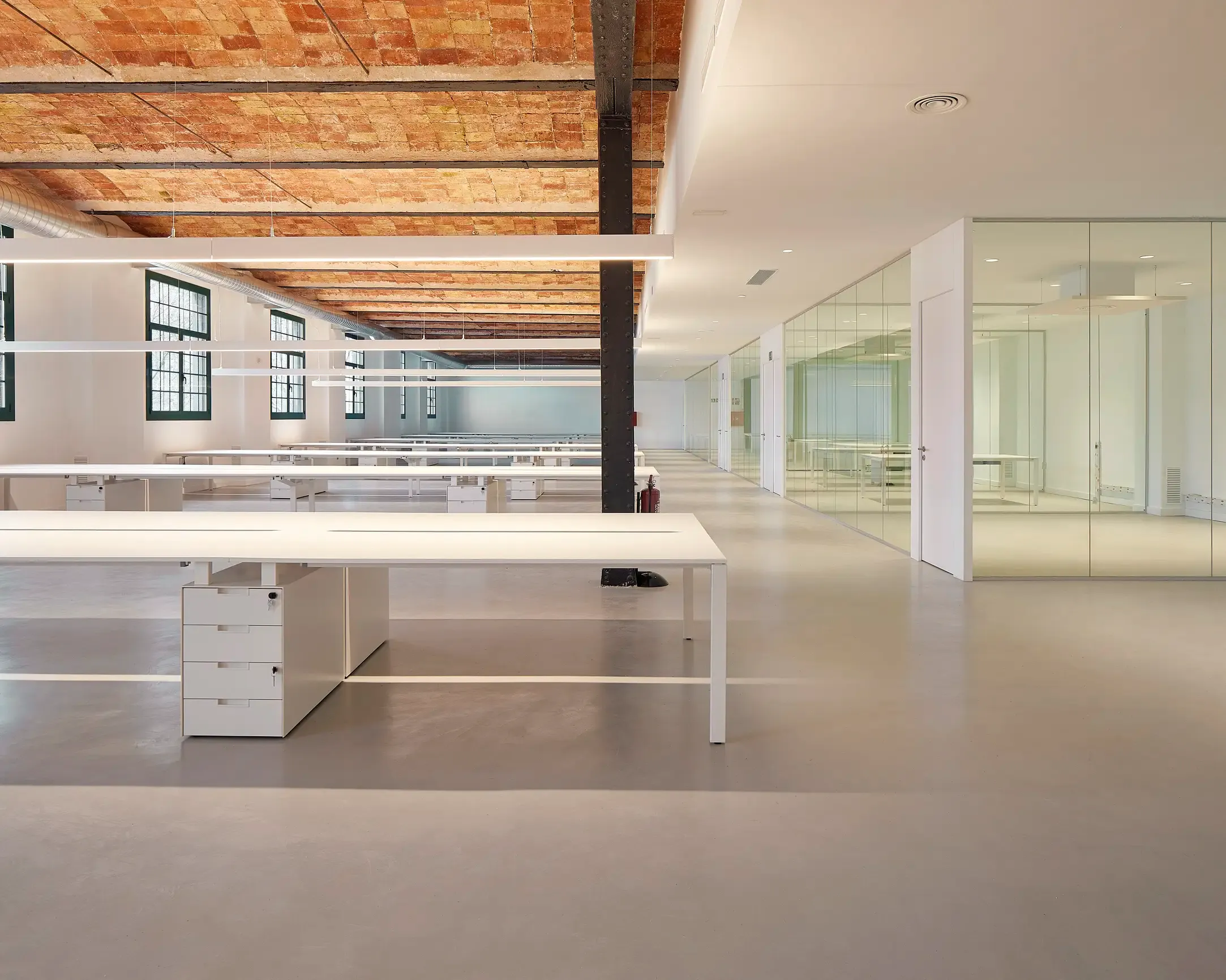
- Layers: sealer, then finishing varnish, preferably two coats of each
- Finishes: matte, satin or gloss; T/Grip for slip resistance
- Foot traffic: 24 hours · water-resistant: 48 hours · heavy furniture: 5 days · full hardness: 21 days
- Not a membrane: wet areas need waterproofing to AS 3740 underneath
- Upkeep: water and a pH-neutral cleaner
- Guarantee: three years in writing when applied by a certified Topcret applicator
What a sealer does, and what it doesn't
It does:
- Keep water out of the surface. Water beads and runs off instead of soaking in and darkening the microcement.
- Resist stains. Wine, oil, coffee, sunscreen and turmeric get time to be wiped away.
- Take the wear. Grit, chair legs and cleaning pads scuff the sealer, not the coloured layer underneath.
- Set the finish. Matte, satin or gloss, and how deep the colour looks.
It doesn't:
Replace a waterproofing membrane. In Australia, showers and wet areas need a membrane installed to AS 3740, under the microcement. The sealer protects the face of the surface; the membrane protects the house.
Fix a moving base. If the slab or wall moves, a crack can come through any sealer. That is a repair [nota: página nueva de este pack] question.
Last forever. It is the part that wears, and it is meant to be renewed.
Types of microcement sealer
Every manufacturer formulates its sealers for its own mortars. This is the general landscape:
| Type | Character | Typical use |
|---|---|---|
| Two-component (2K) polyurethane, water-based | the toughest; mixed with a hardener on site | floors, showers, benchtops, cafés and shops |
| One-component (1K) polyurethane | easier to apply, slightly less resistant | walls and low-traffic areas |
| Water-based acrylic | breathable, natural look | decorative walls |
| Solvent-based | very durable, strong odour | some commercial jobs; rarely used in occupied homes |
Your applicator chooses the sealer to match the Topcret system and the room. Putting another brand's sealer over Topcret microcement is a common cause of peeling and clouding, and it isn't covered by the guarantee.
Which sealer for which part of the house
Showers and ensuites: a 2K system suited to permanent wet areas, over an AS 3740 membrane, with T/Grip on the floor. See microcement showers.
Kitchen benchtops and splashbacks: the most stain-resistant system, because citrus, oil and wine are the hardest test. With engineered stone banned since 1 July 2024, more microcement benchtops are being specified, and the sealer is what makes them work. See microcement benchtops.
Living areas and hallways: a hard-wearing floor system; matte hides fine scratches best. See microcement flooring.
Laundries: treat like a wet area: membrane underneath, 2K sealer on top.
Alfresco areas and outdoor kitchens: the sealer your applicator specifies for outdoor use, over a waterproofed base laid to fall. See outdoor microcement.
Australian conditions that affect the sealer
- Heat. Dark surfaces in full sun get hot, which stresses any coating. Keep the darkest colours to covered areas.
- Salt air. Within a few kilometres of the coast, salt deposits on outdoor surfaces. Rinse alfresco floors and walls with fresh water regularly so salt doesn't build up on the sealer.
- Hard water. Parts of Adelaide, Perth and inland areas have hard water. Limescale doesn't harm microcement, but acidic descalers and vinegar attack the sealer. Squeegee shower walls and stick to pH-neutral cleaners.
How the sealer goes on
- Last microcement coat dry, sanded and dust-free. Dust left on the surface gets trapped under the sealer.
- Sealer coats, preferably two, by roller.
- Finishing varnish coats, preferably two, in the chosen finish.
- Conditions: the room is kept above 15 °C while the coats cure.
- Curing: foot traffic after 24 hours, water-resistant after 48 hours, heavy furniture after 5 days (75% of final hardness), full hardness after 21 days.
Don't clean the surface at all in the first week, and be gentle for the rest of the first month: neutral pH products only, no abrasives. The full method is in microcement application.
Matte, satin or gloss
- Matte: the most natural, stone-like look; hides fine scratches and fingerprints. The usual choice for floors.
- Satin: a soft sheen that deepens colour slightly and wipes easily. Popular on benchtops.
- Gloss: the deepest colour and most reflective; shows smears and scratches more. Can glare in strong sun.
For wet floors and stairs, Topcret's T/Grip adds slip resistance. The rating you need depends on the area and the standards that apply.
Looking after the sealer
- Clean with water and a pH-neutral soap. No bleach, ammonia, vinegar or abrasive pads.
- Put felt pads under furniture and doormats at outside doors; grit is what wears sealer fastest.
- Wipe spills promptly, especially on benchtops.
When to reseal
The microcement lasts for decades on a stable base; the sealer is what you renew. Signs it is time:
- Water test: drop a little water on the busiest spot. If it beads, the sealer is working; if it darkens the surface and soaks in, it's time.
- Dull or patchy walkways, or the area in front of the sink or barbecue.
- Stains that used to wipe off now leave a mark.
Resealing is much lighter than a new installation: clean, lightly sand and apply fresh finishing coats. For surfaces worn by years of use, Topcret's Soil Recovery System renews any Topcret coating. Ask the applicator who did the original job so the products match.
Why Topcret doesn't sell sealer on its own
Topcret's microcements, sealers and varnishes are designed as one system and installed only by applicators Topcret has trained. That is what the written three-year guarantee depends on: under the Guarantee and Insurance Programme, defective material is repaired or replaced at no cost. If you have a microcement surface from another brand or a DIY kit, an applicator can assess whether it can be resealed or needs resurfacing with a complete system. See microcement problems.
Find a certified installer near you
Certified Topcret applicators work in Sydney, Melbourne, Brisbane, Perth, Adelaide, Canberra, the Gold Coast and the Sunshine Coast. Somewhere else? Send us your postcode. Showroom: 205 Grange Road, Fairfield VIC 3078, 0427 949 681.
FAQs
Is a microcement sealer the same as varnish?
The words are used loosely. In Topcret's system there are two layers: a sealer that closes the pores and a finishing varnish that takes the wear and sets the sheen. Together they are what most people call "the sealer".
Does sealed microcement need a waterproofing membrane?
Yes, in showers and other wet areas. The sealer makes the surface water-resistant; the membrane, installed to AS 3740 underneath, is what protects the structure.
How many coats of sealer does microcement need?
Topcret recommends preferably two coats of sealer and two of finishing varnish. Wet areas and benchtops are where skipping a coat shows first.
How long after sealing can I use the shower?
The coating is water-resistant after 48 hours, but the first week is the critical curing period: avoid cleaning products and keep use gentle. Full hardness takes 21 days. Ask your applicator for the exact timing on your job.
Can I reseal microcement myself?
You can keep it clean. Sanding and new finishing coats are best done by an applicator, so the products match the original system and the guarantee stays valid.
How much does resealing cost?
It costs much less than a new installation, which runs at A$160–290 per m² installed. An applicator will quote after seeing the surface.
Request a quote
Tell us about your project
A few quick questions and we will get back to you with a tailored proposal.
Email or call us
The quote form needs JavaScript. You can also contact us directly:
A rough figure is fine.
Optional
Where are you based?
Your handle or a link to the profile.
Your contact details
Last step: we will email or call you with our answer.
Please wait a moment…
Preview: the HubSpot form is embedded here. No data is sent in this demo.
We could not load the last step
Email or call us and we will get back to you all the same:
Thank you for your interest
We have received your enquiry. A Topcret advisor will be in touch with you very soon.
Preview complete
This is a demo: no data was sent and nobody will receive this enquiry.
Discover our Colours
Our colourist experts developed more than 30 base colours to fulfill a wide range of applications. But we don’t want to limit your imagination, so we created Paint To Sample, a Topcret® innovation powered by your imagination, to offer high-end, enhanced personalisation for customers.
Our ISO certification process assures zero colour deviations, so what our client dreamed is what they will see installed in their project.
- Over 30 base colours available
- Colour on demand
- Finishes in several textures
In today’s world our connection with nature holds immense importance, and it is this bond that inspires our colours.
Application process
Surface preparation
Clean, dry and free of dust or grease. Any existing damage is repaired to guarantee a smooth surface.
Primer application
It creates an ideal bonding surface and can be tinted to match the colour of the microcement.
Mixing
It is mixed with water and the chosen pigments until the colour and texture are right.
First coat
Applied in a thin layer, left to dry before the second application.
Second coat
Slightly thicker than the first, this is the one that creates the texture and the finish.
Sealing and finishing
A sealer protects the surface from stains and damage; a finishing wax or oil sets the final look.
Success Stories
Real projects, real results.







What our clients say
- Topcret helped me doing a repair on my existing floor, and went the distance to get a good result. I would definitely use them againGillian D.★★★★★ (opens in a new tab)
- Jack and the team at Topcret were top-draw. We're beyond pleased with the finished look, but also very impressed with the experience. From our 1st meeting to the aftercare, Topcret were nothing but professional, knowledgable, friendly and flexible. Highly recommend.Sam S.★★★★★ (opens in a new tab)
- Topcret and Juan in particular went above and beyond. Juan worked long days to finish the project as soon as possible, and used his technical knowledge and expertise to problem-solve some of the issues we had with previous tradesmen's mistakes. So happy Topcret could match the paint colour we wanted and that the result is more of an even finish than the typical microcement mix of shades (which they can do as well - we just didn't want that look). Delighted with the result and would definitely use them again. Thank you so much!Isabel D.★★★★★ (opens in a new tab)
- We had our kitchen and bathrooms done in our house in Sydney. The team was very friendly and efficient and the end result was exactly what we wanted. Can’t recommend them enough!Carolina R.★★★★★ (opens in a new tab)
- Topcret’s attention to detail and overall quality of their work is exceptional. I am pleased with the results and would highly recommend Topcret to anyone in need of their services.Rodrigo T.★★★★★ (opens in a new tab)
- Jack has been incredibly helpful in answering all my inquiries since I’ve first visited the showroom. He also made sure that all the technical queries that were put forth from the architects were addressed and proposed solutions to better fit the material. I couldn't be happier, and would recommend 100%.Liza M.★★★★★ (opens in a new tab)
- I recently hired Topcret to finish the renovation on my kitchen and couldn’t be happier with the results. The transformation they've made is just incredible. Provided high quality work with great attention to detail. I would recommend Topcret to anyone looking to make their spaces more attractive!Francesco N.★★★★★ (opens in a new tab)
- Love the product and great customer service. I decided to go for a warm terracotta and Top Cret were very happy to accommodate to develop my own colour.Jacqui P.★★★★★ (opens in a new tab)
- Really happy with the quality of work Topcret have provided for my home. They did 2 Bathrooms, floors and walls which were finished in just 3 days. Jack was extremely helpful throughout the process, answering the many questions I had for him. Great product/ service, I will be recommending to everyone.Tommy J.★★★★★ (opens in a new tab)